The symptoms of multiple myeloma (a cancer of the plasma cells in the bone marrow) mostly come from four problems: bone pain, especially in the back and ribs, or a bone that breaks after a minor knock; anaemia and tiredness; kidney damage; and high blood calcium, which causes thirst, constipation and confusion [1, 2]. Repeated infections are also common [2]. Because these symptoms are vague, the diagnosis is often delayed [3]; in people aged 60 or over with persistent bone or back pain, a few simple blood tests, including protein electrophoresis and free light chains, find most cases [4, 5].
Key points
- The symptoms of myeloma are remembered with the four letters CRAB: high Calcium, Renal (kidney) damage, Anaemia and Bone damage [1].
- Bone pain, especially in the back and ribs, and tiredness from anaemia are the main symptoms; about 3 in every 4 patients have anaemia when they are diagnosed [2, 6].
- Myeloma is a disease of older people: in a large review, most patients were over 60 and almost none were younger than 40 [6].
- A simple blood test (protein electrophoresis together with free light chains) is as sensitive for finding myeloma as the full set of tests [5].
- Back pain with weakness or numbness in the legs or trouble controlling your bladder is an emergency [10].
Symptoms of multiple myeloma
| Symptom | Why it happens | What to do |
|---|---|---|
| Bone pain, especially in the back or ribs | Myeloma cells destroy and weaken the bone [2] | Have persistent back or bone pain checked, especially from the age of 60 [4] |
| A bone that breaks after a minor knock | Weakened bone; sometimes the bones of the spine collapse [2, 10] | Tell your doctor about any unexplained fracture [4] |
| Tiredness, weakness and pale skin | Anaemia, because the bone marrow makes fewer red blood cells [2, 6] | A full blood count |
| Thirst, passing a lot of urine, constipation, nausea or confusion | High blood calcium caused by the bone damage [2] | Confusion or severe drowsiness: emergency |
| Kidney problems | One of the main features of myeloma, found with a blood creatinine test [1, 6] | Follow up an unexplained high creatinine |
| Repeated infections or unexplained fever | Infections that keep coming back [2] | Tell your doctor about recurring infections |
| Easy bruising or bleeding, breathlessness | A shortage of blood cells [2] | See your doctor for a blood test |
| Weakness or numbness in the arms or legs | Pressure on the spinal cord or nerve damage [2, 10] | Sudden weakness in the legs: emergency |
Most of these symptoms, especially back pain, have commoner and harmless causes; this table does not replace an examination by a doctor. Sometimes myeloma causes no symptoms at all and is found in a blood test done for another problem [2].
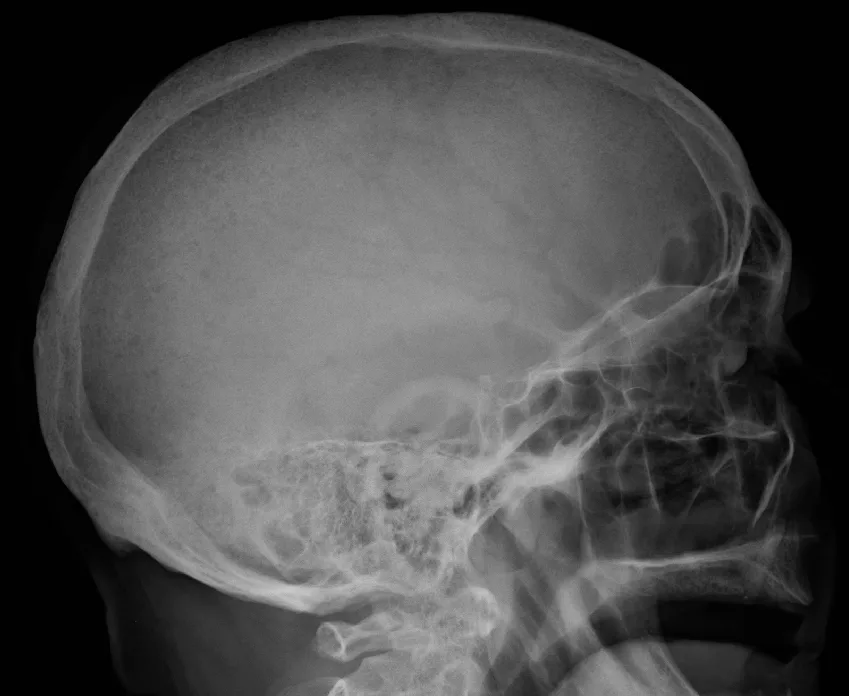
Why is myeloma often diagnosed late?
Back pain, tiredness and infections are common in older people and have many causes, so myeloma is sometimes found late. In a large survey in England, almost half of the patients with myeloma had seen their family doctor three or more times before being referred for further tests, more than with the other cancers in that survey [3].
If you are 60 or older and have bone or back pain that does not go away, or a bone has broken after a minor knock, ask your doctor for the simple blood tests described in the next section [4].
Tests and the path to diagnosis
- 1
- 2
Protein electrophoresis and free light chains
Serum protein electrophoresis shows the abnormal myeloma protein (M protein). The free light chain test finds a type of myeloma that makes only small pieces of protein; about 1 in every 5 patients has this type [6]. Together, these two tests were as sensitive for finding myeloma as the full set of tests [5]. If the light chain test is not available, a urine test (Bence-Jones) is used instead [4].
- 3
Bone marrow sample
If the results are suspicious, a haematologist takes a small sample of bone marrow from the hip bone. Myeloma is confirmed when abnormal plasma cells are found in the bone marrow together with one of the problems above or certain specific markers [1].
- 4
Whole-body imaging
Low-dose whole-body CT, PET-CT or MRI is used to find bone damage [1]. Read more: the full guide to multiple myeloma.
When should I call my doctor?
If you are 60 or older and have bone or back pain that does not go away, a bone that broke after a minor knock, or tiredness and one infection after another, see your doctor and ask about tests for myeloma [4].
Go to an emergency department straight away with: back pain together with weakness or numbness in the legs or loss of bladder or bowel control, which may be a sign of pressure on the spinal cord [10]; confusion, severe drowsiness or great thirst, which may be a sign of very high calcium [2]; or passing very little urine.
Who is at higher risk?
- Older age: myeloma is seen mostly in middle-aged and older people [2]; in a large review, most patients were over 60 [6].
- Being male and being Black [2].
- A history of MGUS: a condition without symptoms in which an abnormal protein is present in the blood but there is no cancer. About 3 in every 100 people over 50 have it [9], and each year about 1 in every 100 people with MGUS goes on to develop myeloma or a related disease [8].
- Exposure to radiation or certain chemicals [2].
Frequently asked questions
I have back pain; could it be myeloma?
Most back pain has commoner causes such as muscle, disc or arthritis problems. But back or bone pain that persists from the age of 60 onwards, or comes with tiredness, anaemia or an unexplained fracture, is worth the simple blood tests for myeloma [4].
Can a routine blood count (CBC) detect myeloma?
My blood test showed an M protein or MGUS; does that mean I have cancer?
No. MGUS is not cancer, and about 3 in every 100 people over 50 have it [9]. Each year about 1 in every 100 people with MGUS goes on to develop myeloma or a related disease [8], which is why your doctor repeats the tests regularly. Read more: MGUS and smouldering myeloma.
Does every patient with myeloma have an M protein in the blood?
Almost all. In a large review, about 1 in every 5 patients made only light chains, which are found with the free light chain test, and only about 3 in every 100 patients made no measurable protein [6].
Is myeloma a bone cancer?
Not exactly. Myeloma is a cancer of plasma cells, white blood cells in the bone marrow that make antibodies. Myeloma cells weaken the bone from the inside [2], so myeloma belongs to the blood cancers. See blood cancers.
Why does early diagnosis of myeloma matter?
The International Myeloma Working Group stresses that delaying the diagnosis and postponing treatment can harm patients [1]. For today's treatments, read new treatments for multiple myeloma.
Referral and diagnostic criteria (for physicians)
For physicians
NICE NG12 (amended 2025). In people aged 60 and over with persistent bone pain, particularly back pain, or an unexplained fracture: a full blood count, calcium, plasma viscosity or ESR, paraprotein by serum protein electrophoresis, and serum free light chains; if serum free light chain testing is not available, a urine Bence-Jones test. If the results suggest myeloma, refer on a suspected cancer pathway (diagnosis or exclusion within 28 days) [4].
IMWG 2014 definition. Clonal bone marrow plasma cells of 10% or more or a biopsy-proven plasmacytoma, plus at least one myeloma-defining event: hypercalcaemia (calcium more than 0.25 mmol/L above the upper limit of normal or more than 2.75 mmol/L, i.e. more than 11 mg/dL), renal insufficiency (creatinine clearance below 40 mL/min or serum creatinine above 2 mg/dL), anaemia (haemoglobin below 10 g/dL or more than 2 g/dL below the lower limit of normal), one or more lytic lesions on skeletal radiography, CT or PET-CT; or one of the SLiM biomarkers: plasma cells of 60% or more, an involved to uninvolved serum free light chain ratio of 100 or more, or more than one focal lesion (5 mm or larger) on MRI [1].
Clinical presentation (1027 newly diagnosed patients, Mayo Clinic, 1985 to 1998). Median age 66 years, 2% younger than 40 and 38% aged 70 or older; anaemia 73%, calcium 11 mg/dL or higher 13%, creatinine 2 mg/dL or higher 19%, an abnormality on conventional radiographs 79%. A localised band on SPEP in 82% and a monoclonal protein on immunofixation in 93%; light-chain myeloma 20% and non-secretory 3% [6].
Screening panel. In 1877 patients with a plasma cell disorder, a simplified panel of SPEP plus serum FLC had no loss of sensitivity for myeloma compared with the full panel (SPEP, IFE and FLC); sensitivity for MGUS fell by 8% [5]. In primary care (2703 cases and 12,157 controls), a normal haemoglobin together with a normal PV had a negative LR of 0.12 (0.07 to 0.23), and normal haemoglobin, calcium and PV together a negative LR of 0.06 (0.02 to 0.18); PV and ESR were better than CRP for both ruling in and ruling out myeloma [7].
Diagnostic delay. In the 2010 National Cancer Patient Experience Survey in England (41,299 patients, 24 cancers), 50.6% of patients with myeloma had consulted their GP three or more times before referral; OR 3.42 (3.01 to 3.90) versus rectal cancer, the highest of the cancers studied [3].
Spinal cord compression. The IMWG Bone Working Group recommends radiotherapy for symptomatic or impending spinal cord compression, and surgery for vertebral column instability or spinal cord compression by bone fragments [10].
Scientific evidence
Scientific evidence
3 itemsInternational Myeloma Working Group updated criteria for the diagnosis of multiple myeloma
A Long-Term Study of Prognosis in Monoclonal Gammopathy of Undetermined Significance
Treatment of multiple myeloma-related bone disease: recommendations from the Bone Working Group of the International Myeloma Working Group
Related cancer types
References
10 referencesShow all references, 3 with a study cardClose the reference list
Numbers in the text, such as [1], refer to these sources. Sources with a “Study card” button are summarised in the site’s evidence library.
- 1
- 2
- 3
- 4
- 5
- 6
- 7
- 8A long-term study of prognosis in monoclonal gammopathy of undetermined significance
- 9
- 10
This page is based on reputable scientific sources and was last updated on 28 October 2026. The content of this website is for educational and informational purposes only and does not replace consultation, diagnosis or treatment by a specialist physician. Consult your treating physician about any treatment decision.
Printed from the website; the full and up-to-date version: https://drdabiri.com/en/questions/symptoms-of-multiple-myeloma/