The symptoms of leukaemia mostly come from a shortage of healthy blood cells: tiredness and weakness, paleness, fever and repeated infections, easy bruising or bleeding, and tiny red spots under the skin (petechiae) [4, 5]. In acute leukaemias these symptoms usually appear over a few weeks before diagnosis, whereas chronic lymphocytic leukaemia (CLL) often has no symptoms at first and is found on a routine blood test [4, 5]. These symptoms are non-specific and usually have other causes such as infection; the first step is a simple full blood count (CBC) [4].
Symptoms of leukaemia
| Symptom | Most often reported in | What to do |
|---|---|---|
| Tiredness, weakness and paleness | Acute leukaemias and CLL [4, 5] | If it is persistent and unexplained, have a CBC |
| Fever and repeated infections | Acute leukaemias and CLL [4, 5, 6] | Have persistent or repeated fever checked |
| Easy bruising or bleeding | Acute leukaemias and CLL [4, 5] | See a doctor as soon as possible |
| Tiny dark red spots under the skin (petechiae) | ALL and CLL [5, 6] | See a doctor as soon as possible |
| Heavy night sweats and unexplained weight loss | ALL and CLL [5, 6] | See a doctor to be checked |
| Painless swelling of lymph nodes (neck, armpit, groin) | CLL and ALL [5, 6] | Have a node that lasts several weeks checked |
| Pain or a feeling of fullness under the ribs | CLL and ALL [5, 6] | See a doctor to be checked |
| Bone or abdominal pain, shortness of breath | ALL [6] | See a doctor to be checked |
This table does not replace an examination by a doctor; in most people these symptoms have a benign cause.
The path to diagnosis
- 1
Full blood count (CBC)
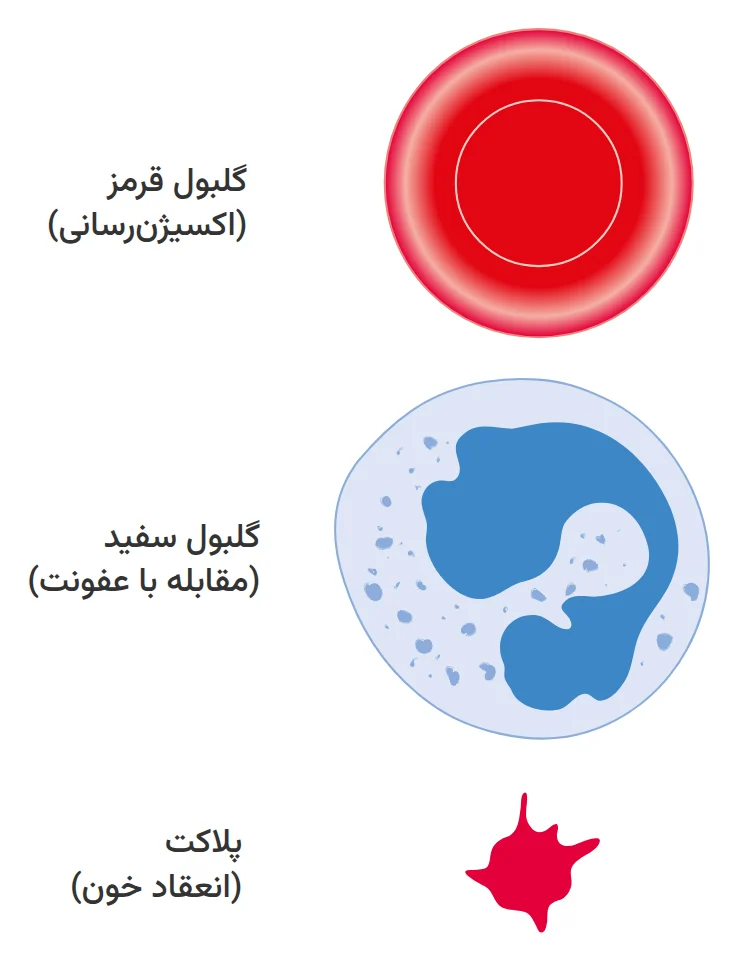
Counting the blood cells and looking at them under a microscope to find immature cells (blasts) [4].
- 2
- 3
- 4
When should I call my doctor?
A combination of fever, unusual bruising or bleeding and severe tiredness that has developed over a few days to a few weeks needs a full blood count (CBC) quickly. Acute leukaemias are medical emergencies.
Bleeding that will not stop, or a high fever with chills or shortness of breath, needs urgent care at an emergency department. If you are having chemotherapy, tell your treatment team about any fever without delay.
Related questions
I have bruises on my body; do I have leukaemia?
Is "blood cancer" only leukaemia?
In everyday language, "blood cancer" is sometimes also used for lymphoma and multiple myeloma. This page is about leukaemia; for the other types, see the guide to blood cancers.
Can leukaemia in children be cured?
In children and teenagers with ALL in the United States, about 9 in 10 are alive 5 years later [7].
Related cancer types
References
7 referencesShow all references, 4 with a study cardClose the reference list
Numbers in the text, such as [1], refer to these sources. Sources with a “Study card” button are summarised in the site’s evidence library.
- 1The 5th edition of the World Health Organization Classification of Haematolymphoid Tumours: Myeloid and Histiocytic/Dendritic Neoplasms
- 2
- 3iwCLL guidelines for diagnosis, indications for treatment, response assessment, and supportive management of CLL
- 4
- 5
- 6
- 7Improved Survival for Children and Adolescents With Acute Lymphoblastic Leukemia Between 1990 and 2005: A Report From the Children's Oncology Group
This page is based on reputable scientific sources and was last updated on 28 October 2026. The content of this website is for educational and informational purposes only and does not replace consultation, diagnosis or treatment by a specialist physician. Consult your treating physician about any treatment decision.
Printed from the website; the full and up-to-date version: https://drdabiri.com/en/questions/symptoms-of-leukemia/