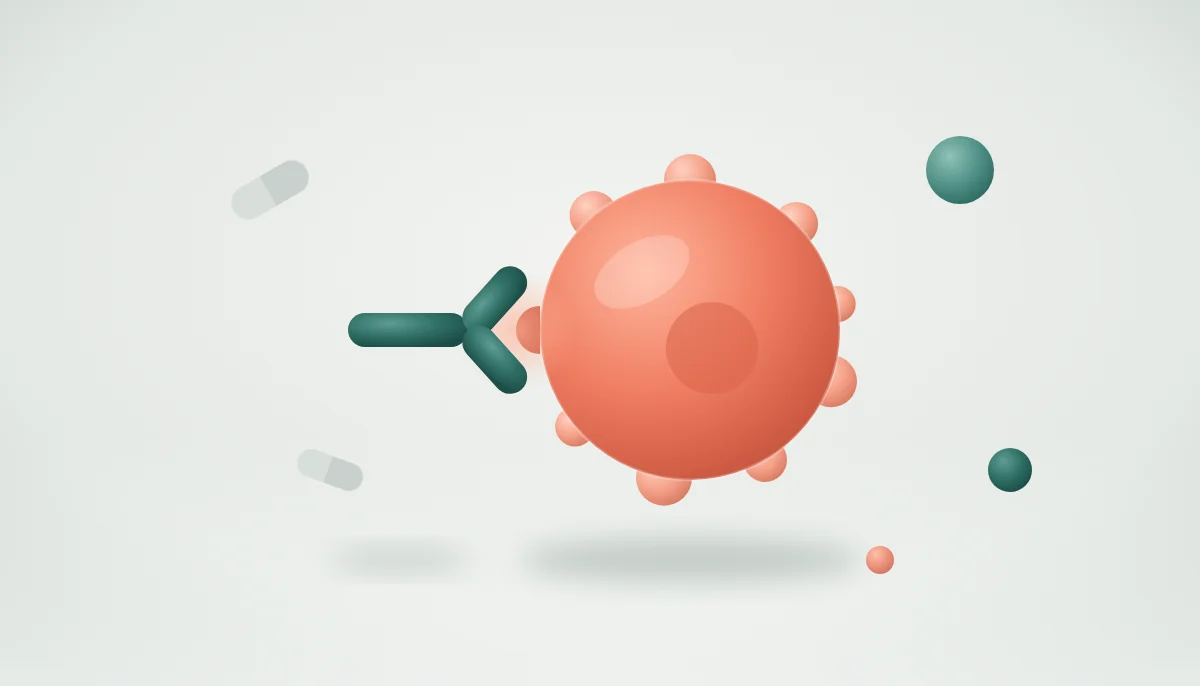
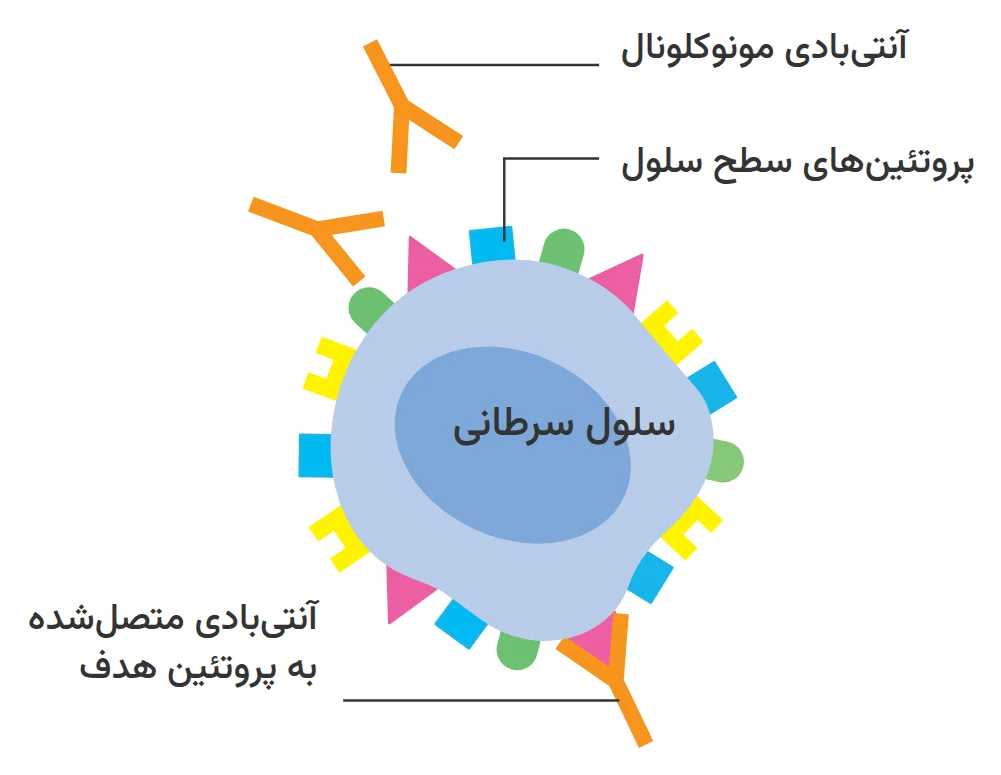
Targeted therapy means medicines that target the proteins that control the growth, division and spread of cancer cells, unlike chemotherapy, which often kills all fast-dividing cells [1]. For most of these medicines, a "biomarker test" on a tumour or blood sample must first show whether the tumour has the drug's target [1]. Successful examples are imatinib in chronic myeloid leukaemia (more than 8 in 10 patients were alive after 10 years) and osimertinib in EGFR-mutant lung cancer [2, 3].
How do targeted therapies work?
| Mechanism | Explanation |
|---|---|
| Blocking growth signals | Some cancer cells have altered surface proteins that tell them to divide without an outside signal; the medicine blocks these proteins |
| Blocking blood vessel growth | Angiogenesis inhibitors stop the formation of blood vessels that feed the tumour |
| Delivering a killing substance to the cancer cell | Antibodies attached to a toxin, a chemotherapy drug or a radioactive substance that destroy only cells with the target |
| Inducing programmed death (apoptosis) | Some medicines make the cancer cell undergo natural cell death |
| Starving the cancer of hormones | Hormone therapy in some breast and prostate cancers blocks the production or action of hormones |
| Helping the immune system | Some medicines mark cancer cells for the immune system |
Biomarker testing: who gets targeted therapy?
In some cancers, such as chronic myeloid leukaemia (CML), almost all patients have the drug target. But most of the time the tumour must be tested to find drug targets; this is called "biomarker testing" and may need a biopsy [1]. Biomarker testing is done on cancer cells (a piece of tumour or a blood sample) and is different from genetic testing to find inherited mutations [5].
For physicians
The 2024 update of the ESMO Precision Medicine Working Group recommends tumour NGS in advanced non-squamous non-small cell lung cancer, prostate, colorectal, cholangiocarcinoma and ovarian cancer, and extends it to advanced breast cancer and rare tumours such as GIST, sarcoma, thyroid cancer and cancer of unknown primary; NGS is also recommended to detect tumour-agnostic alterations in metastatic cancers when matched treatment is accessible [4].
| Medicine | Target | Cancer | Key result |
|---|---|---|---|
| Imatinib | BCR-ABL1 | Chronic myeloid leukaemia (chronic phase) | 10-year overall survival 83.3% in the IRIS trial [2] |
| Trastuzumab | HER2 | HER2-positive metastatic breast cancer (25 to 30% of breast cancers overexpress HER2) | Added to chemotherapy: median survival 25.1 vs 20.3 months [6] |
| Osimertinib | EGFR mutation | Advanced non-small cell lung cancer | Median progression-free survival 18.9 vs 10.2 months with older EGFR inhibitors [3] |
Limitations and side effects
"Targeted" does not mean "free of side effects": scientists at first thought these medicines would have fewer side effects than chemotherapy, but it turned out they can also cause serious side effects [1]. Cancer cells may become resistant; either the target changes or the cell finds another way to grow. This is why targeted therapy is sometimes given with other treatments [1]. The most common side effects are diarrhoea and liver problems, and others include problems with blood clotting and wound healing, high blood pressure, tiredness, mouth sores, nail changes, loss of hair colour and skin problems; rarely, a hole forms in the wall of the digestive tract [1]. Some medicines have specific side effects; for example, in the trastuzumab study, when trastuzumab was given at the same time as strong chemotherapy (doxorubicin and cyclophosphamide), about 1 in 4 patients developed a heart problem; this is why heart function is checked regularly with this treatment [6]. Most side effects go away after treatment ends [1].
Related questions
Can every patient have targeted therapy?
No. Targeted therapy only helps when the tumour has the drug target; this is usually found out with a biomarker test [1].
How is targeted therapy taken?
Small-molecule medicines are tablets or capsules taken by mouth, and monoclonal antibodies are usually given into a vein; they may be daily, weekly or monthly, and sometimes in cycles [1].
Why does a medicine sometimes stop working after a while?
Because of resistance: the drug target changes or the cancer cell finds another way to grow that does not depend on that target [1].
Is targeted therapy better than chemotherapy?
In some cancers with a specific marker, yes, and in others chemotherapy is still needed. Examples and questions to ask your doctor: Chemotherapy or targeted therapy?
Scientific evidence
Key studies in the evidence library
1 itemLong-Term Outcomes of Imatinib Treatment for Chronic Myeloid Leukemia
Related cancer types
Related questions
References
6 referencesShow all references, 4 with a study cardClose the reference list
Numbers in the text, such as [1], refer to these sources. Sources with a “Study card” button are summarised in the site’s evidence library.
- 1
- 2Long-Term Outcomes of Imatinib Treatment for Chronic Myeloid Leukemia
- 3Osimertinib in Untreated EGFR -Mutated Advanced Non–Small-Cell Lung Cancer
- 4Recommendations for the use of next-generation sequencing (NGS) for patients with advanced cancer in 2024: a report from the ESMO Precision Medicine Working Group
- 5The Genetics of Cancer
- 6Use of Chemotherapy plus a Monoclonal Antibody against HER2 for Metastatic Breast Cancer That Overexpresses HER2
This page is based on reputable scientific sources and was last updated on 28 October 2026. The content of this website is for educational and informational purposes only and does not replace consultation, diagnosis or treatment by a specialist physician. Consult your treating physician about any treatment decision.
Printed from the website; the full and up-to-date version: https://drdabiri.com/en/questions/what-is-targeted-therapy/