Radiotherapy is a treatment that uses high doses of radiation to damage the DNA of cancer cells so that they die or grow more slowly; it can be used to cure, to prevent recurrence, to slow growth or to ease symptoms such as pain [1]. Its side effects depend mainly on the part of the body being treated; tiredness is common, and damaged healthy cells usually recover within a few months after treatment ends [2]. External radiotherapy does not make the patient radioactive, and being around other people, even children and pregnant women, is safe [3].
How does radiotherapy work?
At high doses, radiation kills cancer cells or slows their growth by damaging their DNA. Cells whose DNA has been damaged beyond repair stop dividing or die, and the body clears them away. This process takes days to weeks of treatment and continues for weeks or months after radiotherapy ends [1].
Radiotherapy may be the only treatment, but it is more often given together with surgery, chemotherapy or immunotherapy, before, during or after them; for example before surgery to shrink a tumour, or after surgery to destroy remaining cells [1].
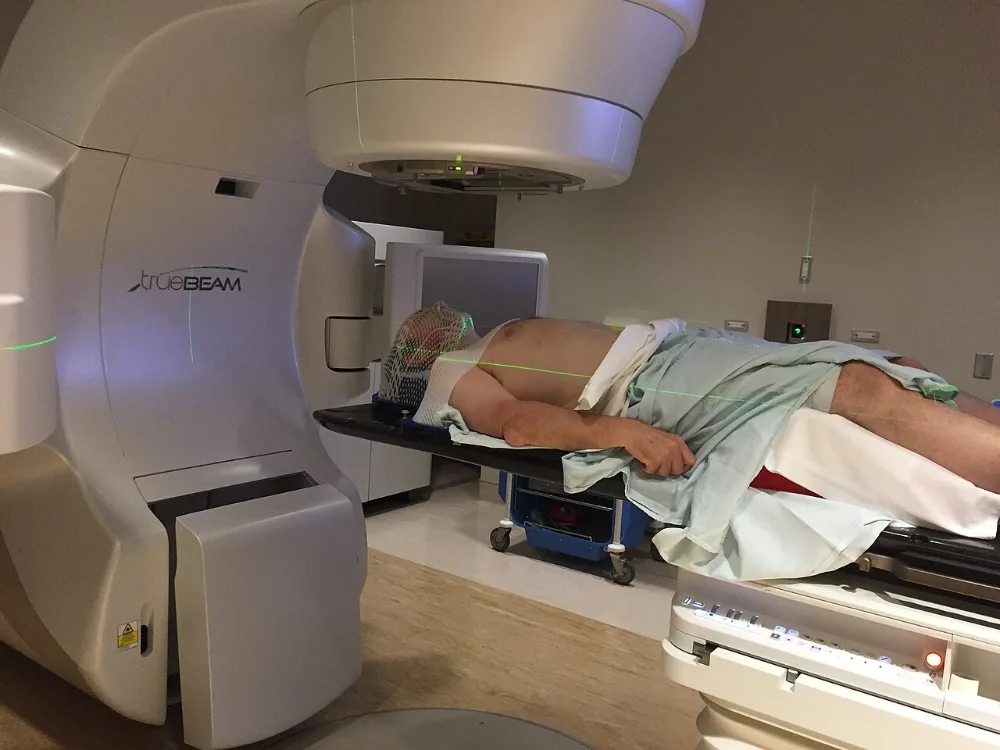
Types of radiotherapy
| Type | How is it given? | Example uses |
|---|---|---|
| External radiotherapy | A large machine outside the body aims radiation at the tumour from several directions; it is a local treatment | Many types of cancer |
| Brachytherapy (internal radiotherapy with a solid source) | Seeds, ribbons or capsules containing radioactive material are placed in or near the tumour | Most cancers of the head and neck, breast, cervix, prostate and eye |
| Systemic radiotherapy (liquid source) | By mouth or by IV injection; the drug travels in the blood to cancer cells | Radioactive iodine in some thyroid cancers; targeted radionuclide therapy in some patients with advanced prostate cancer or neuroendocrine tumours |
External radiotherapy does not make you radioactive, and you can safely be around other people, including pregnant women, babies and children [3]. But with brachytherapy the radiation source inside the body gives off radiation for a time, and with systemic radiotherapy body fluids such as urine, sweat and saliva are radioactive for a while; the treatment team explains the safety precautions needed [1].
How many sessions does radiotherapy take?
Most people receive external radiotherapy once a day, five days a week. Dividing the dose into several sessions gives healthy cells a chance to recover and makes the radiation more effective. The number of weeks depends on the type of cancer, the aim of treatment, the dose and the radiotherapy schedule, and with some techniques using larger daily or weekly doses, fewer weeks are needed [3]. Before starting, a planning session (simulation) is done [3].
For physicians
An example of shorter treatment: in the FAST-Forward trial of 4096 patients with early breast cancer, a schedule of 26 Gy in 5 fractions over one week was non-inferior to the standard 40 Gy in 15 fractions over three weeks for local recurrence, and was as safe for normal tissue effects up to 5 years [5].
Side effects of radiotherapy by treatment area
| Area treated | Possible side effects |
|---|---|
| Brain | Tiredness, hair loss, memory or concentration problems, nausea and vomiting, skin changes, headache, blurred vision |
| Breast | Tiredness, hair loss, skin changes, swelling (oedema), tenderness |
| Chest | Tiredness, hair loss, skin changes, throat problems such as difficulty swallowing, cough, shortness of breath |
| Head and neck | Tiredness, hair loss, mouth problems, skin changes, changes in taste, throat problems such as difficulty swallowing, an underactive thyroid |
| Pelvis | Diarrhoea, tiredness, hair loss, nausea and vomiting, sexual and fertility problems in women and men, skin changes, urinary and bladder problems |
| Abdomen and stomach | Diarrhoea, tiredness, hair loss, nausea and vomiting, skin changes, urinary and bladder problems |
Hair loss happens only in the area that receives radiation [6]. Some side effects ("late effects") may appear months or years after treatment [2].
Related questions
Will the hair on my head fall out?
Only if the head is in the treatment area; radiotherapy causes hair loss only in the area being treated. Hair usually grows back 3 to 6 months after treatment ends, but after very high doses it may be thinner or not grow back [6].
Can I work during radiotherapy?
Some people work full time, some part time and some not at all. You usually feel better at the start of treatment, and tiredness builds up over the weeks; after treatment ends, recovery may take a few weeks to a few months [1].
Does nutrition matter during radiotherapy?
Yes. The body uses a lot of energy for repair, and getting enough calories and protein to keep your weight up matters; if nausea or mouth sores make eating hard, talk to your treatment team or a dietitian [1].
Related cancer types
References
6 referencesShow all references, 2 with a study cardClose the reference list
Numbers in the text, such as [1], refer to these sources. Sources with a “Study card” button are summarised in the site’s evidence library.
- 1
- 2
- 3
- 4The role of radiotherapy in cancer treatment
- 5Hypofractionated breast radiotherapy for 1 week versus 3 weeks (FAST-Forward): 5-year efficacy and late normal tissue effects results from a multicentre, non-inferiority, randomised, phase 3 trial
- 6
This page is based on reputable scientific sources and was last updated on 28 October 2026. The content of this website is for educational and informational purposes only and does not replace consultation, diagnosis or treatment by a specialist physician. Consult your treating physician about any treatment decision.
Printed from the website; the full and up-to-date version: https://drdabiri.com/en/questions/what-is-radiotherapy/