Most anaemia is not cancer; iron deficiency is one of its most common causes, and in women before the menopause it is usually due to periods and pregnancy [1]. But take unexplained iron-deficiency anaemia in men and post-menopausal women seriously: about 1 in 3 of these people has an underlying condition, usually in the digestive tract, and bowel or stomach cancer sometimes shows itself only through anaemia, with no other symptoms [1]. This is why guidelines recommend a stomach endoscopy and a colonoscopy for these people [1, 2].
Key points
- Anaemia means a haemoglobin level below normal; in adults, below 13 in men and below 12 in non-pregnant women (grams per decilitre) [4]. Anaemia is a sign, and its treatment depends on the cause [6].
- In men and post-menopausal women with iron-deficiency anaemia, a stomach endoscopy and a colonoscopy are recommended; these tests find cancer in about 1 in 10 to 12 people [1, 2].
- Slow bleeding from the bowel or stomach is often invisible; you may see no blood in your stools and have only anaemia [1].
- Anaemia is not the same as blood cancer. Blood cancer is more likely when anaemia comes with fever, repeated infections, or unexplained bruising or bleeding [3].
- Anaemia is common during chemotherapy and, depending on its cause and severity, is treated with iron, medicines or a blood transfusion [7, 10].
Low haemoglobin: can anaemia be a sign of cancer?
Anaemia means that the amount of haemoglobin, the protein in red blood cells that carries oxygen, is lower than normal. The World Health Organization defines anaemia in adults as a haemoglobin below 13 grams per decilitre in men and below 12 in non-pregnant women [4]. Anaemia may cause no symptoms and be found only on a blood test, or it may cause tiredness, weakness and shortness of breath [6].
Anaemia has many causes: lack of iron, lack of vitamin B12 or folic acid, kidney disease, long-term inflammation and hidden blood loss from the digestive tract; in many older people no cause is found [6]. Iron deficiency is one of the most common causes. In women before the menopause it is usually due to periods and pregnancy; but in men and post-menopausal women it is often due to slow, hidden bleeding from the digestive tract [1].
Of every 3 men or post-menopausal women with iron-deficiency anaemia, about 1 has an underlying condition, usually in the digestive tract, such as an ulcer, bowel inflammation, coeliac disease or cancer [1]. Cancer is found in about 1 in 10 to 12 of these people [1]. So most of them do not have cancer, but they need to be checked, because bowel and stomach cancers sometimes show themselves only through anaemia, with no other symptoms [1].
Anaemia and bowel cancer
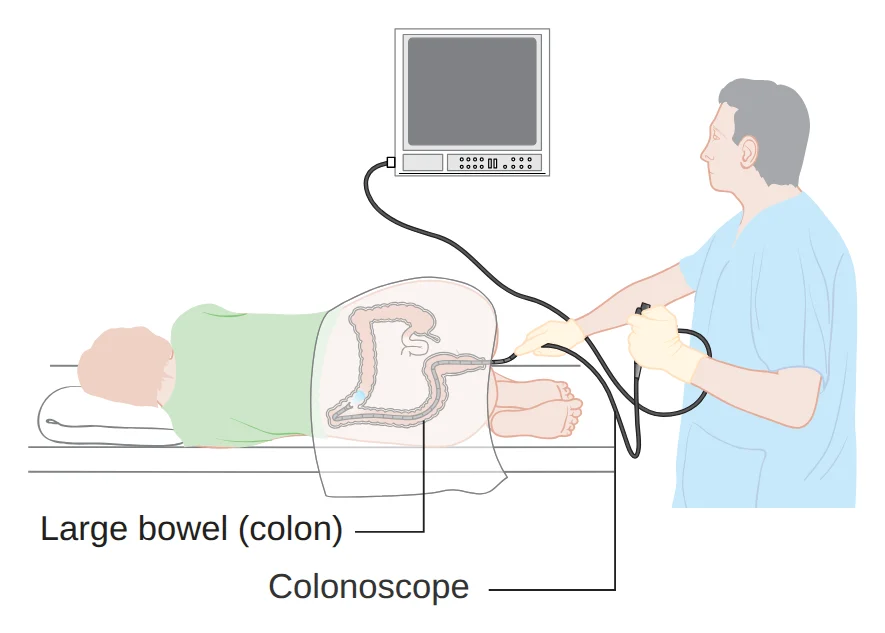
Bowel cancer and bowel polyps can bleed [1, 8]. The bleeding is sometimes so slight that it cannot be seen in the stool; but because blood is rich in iron, over time it uses up the body's iron stores and causes iron-deficiency anaemia [1]. This is why someone may see no blood in their stools and still have a source of bleeding in the bowel [1].
In a large English study, the lower the haemoglobin and the older the person, the higher the chance of bowel cancer. Of men over 60 with a haemoglobin below 11 and iron deficiency, about 1 in 8 had bowel cancer; in women with a haemoglobin below 10 and iron deficiency, about 1 in 13 [5].
A colonoscopy finds both cancer and polyps, and polyps can be removed during the same colonoscopy [1]. Read more: What are bowel polyps and are they dangerous?, Blood in your stool: what does it mean? and What are the symptoms of bowel cancer?
 (full-size image, opens in a new tab)
Anaemia and stomach cancer
Stomach and oesophageal cancer can also first show themselves through iron-deficiency anaemia [1]. But the stomach has more common causes too: stomach ulcers, long-term inflammation of the stomach (atrophic gastritis), the stomach bacterium Helicobacter pylori, long-term use of acid-reducing medicines such as omeprazole, and stomach surgery; these either cause bleeding or reduce how much iron is absorbed [1]. Coeliac disease (a reaction of the small bowel to gluten in wheat) is found in 3 to 5 in every 100 people with iron-deficiency anaemia [1].
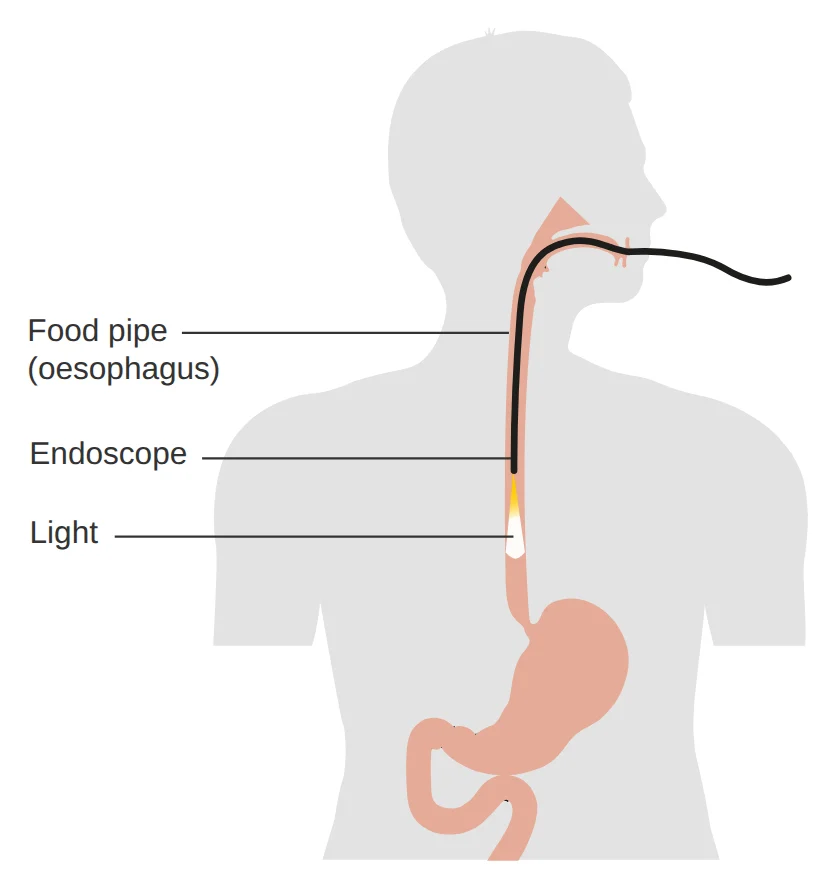
During an endoscopy, the doctor looks at the oesophagus, the stomach and the first part of the small bowel and takes samples if needed; a sample from the first part of the small bowel is also used to check for coeliac disease [1]. If you are 55 or over and have upper abdominal pain together with anaemia, an endoscopy is recommended to check for stomach cancer [3]. Read more: What are the symptoms of stomach cancer? and Stomach ulcer or stomach cancer: what is the difference?
 (full-size image, opens in a new tab)
Who needs an endoscopy and a colonoscopy?
| Who | Recommended tests |
|---|---|
| Men with iron-deficiency anaemia | A stomach endoscopy and a colonoscopy; if a colonoscopy is not possible, a special CT scan of the bowel (CT colonography) [1, 2] |
| Post-menopausal women with iron-deficiency anaemia | A stomach endoscopy and a colonoscopy [1, 2] |
| Women before the menopause | The cause is usually periods and pregnancy, and digestive cancer is very uncommon; a blood test for coeliac disease is recommended. The stomach and bowel may need to be checked if you are 50 or over, have no periods (for example after a hysterectomy), have warning symptoms, have a strong family history of bowel cancer (two first-degree relatives, or one diagnosed before 50), or if the anaemia keeps coming back or is out of proportion to your periods [1] |
| All adults with iron-deficiency anaemia | A urine test and a coeliac test [1]; in UK national guidance, a stool test for hidden blood (FIT) is also used to decide on urgent referral [3] |
| People aged 60 or over with any anaemia, even without iron deficiency | A stool test for hidden blood (FIT) to decide on referral [3] |
| Frail older people or those with serious illnesses | The doctor weighs up the benefits and risks of the tests with the patient and their family [1] |
Do not put off the tests: in the UK, unexplained iron-deficiency anaemia in people at risk is a reason for fast-track referral [1].
What tests will the doctor do?
- 1
Full blood count (CBC) and red cell size
Small red cells are seen mostly in iron deficiency and thalassaemia [1], and large red cells in lack of vitamin B12 or folic acid [6]. If you know you carry thalassaemia trait (for example, from an earlier blood test), tell your doctor; in that case a special haemoglobin test helps to find the cause [1]. To read your results: Understanding your CBC results.
- 2
Ferritin (iron stores)
A ferritin below 15 almost always means iron deficiency, and up to 45 iron deficiency is still likely [1, 2]. Because ferritin rises with inflammation, it is sometimes reported as normal even when iron is lacking [1]. Read more: High LDH, ferritin or ESR: do they mean cancer?
- 3
Coeliac test and urine test
A blood test for coeliac disease and a urine test (for blood in the urine) are part of the first checks for everyone with iron-deficiency anaemia [1].
- 4
- 5
Iron treatment
Iron treatment is given alongside the search for the cause. If the haemoglobin rises by at least 1 gram per decilitre within 2 weeks, iron deficiency is very likely. Iron tablets are continued for about 3 months after the haemoglobin returns to normal to refill the iron stores; if tablets do not work or are not tolerated, iron is given by infusion [1].
Anaemia or blood cancer: what is the difference?
Anaemia and blood cancer are two different things. Anaemia means a low haemoglobin; it is a laboratory finding with many causes [6]. Blood cancer (leukaemia) is a cancer of the blood-making cells in the bone marrow, and one of its effects is anaemia [7]. So leukaemia can cause anaemia, but most anaemia is not caused by leukaemia [6].
Signs that make a doctor think of leukaemia: paleness, lasting tiredness, unexplained fever, repeated infections, unexplained bruising or bleeding, tiny red spots under the skin, swollen lymph nodes in several places, or an enlarged liver and spleen. With any of these signs, a blood count (CBC) should ideally be done within 48 hours [3].
Multiple myeloma (a cancer of plasma cells in the bone marrow) also often causes anaemia: in a review of more than 1,000 patients, about 3 in 4 had anaemia at diagnosis [9]. If you are 60 or over and have persistent bone pain, especially back pain, or an unexplained fracture, your doctor will order calcium, ESR and blood protein tests along with a CBC [3].
Read more: Leukaemia, lymphoma and bone marrow cancer: what is the difference?, Signs of leukaemia in a CBC blood test and Symptoms of multiple myeloma
Anaemia during chemotherapy
Chemotherapy and radiotherapy, and cancers that affect the bone marrow, can cause anaemia [7]. Anaemia can cause severe tiredness, shortness of breath, light-headedness, dizziness or fainting, headaches, a racing heart and pale skin [7].
These things help [7]:
- Save your energy for the things that matter most and ask others for help.
- Balance rest with light daily activity, such as a short walk.
- Eat and drink well, and talk to your care team about foods rich in protein and iron.
Treatment depends on the cause and severity of the anaemia: iron tablets or infusions, medicines that stimulate red cell production, or a blood transfusion [7, 10]. Medicines that stimulate red cell production are used for chemotherapy-related anaemia when the haemoglobin has fallen below 10 and the aim of treatment is not to cure the cancer [10]. In stable patients in hospital, a blood transfusion is usually considered when the haemoglobin is below 7; but the doctor also takes your overall condition into account [11].
Read more: Low blood counts and preventing infection. For doctors: Anaemia in cancer: transfusion, erythropoiesis-stimulating agents and iron.
When should I contact a doctor?
Go to an emergency department straight away or call your local emergency number if you have anaemia together with chest pain, severe shortness of breath or fainting [7], or if you vomit blood or your stools are black and tarry.
See a doctor within the next few days if:
- You are a man or a post-menopausal woman and have iron-deficiency anaemia with no known cause [1]
- You are 60 or over and have anaemia [3]
- You have anaemia together with a change in bowel habit, blood in your stools, unexplained weight loss or abdominal pain [3]
- Your anaemia comes with unexplained fever, repeated infections, unexplained bruising or bleeding, or swollen lymph nodes; in this case do not wait, and have a full blood count within 2 days [3]
- You have taken iron tablets but your anaemia has not improved or has come back [1]
Frequently asked questions
I have anaemia but see no blood in my stools; could it come from my bowel?
Yes. Slow bleeding from the bowel or stomach is often invisible and shows itself only as iron-deficiency anaemia [1]. A stool test for hidden blood can detect this blood [3], but for men and post-menopausal women with iron-deficiency anaemia, an endoscopy and a colonoscopy are usually recommended straight away [1, 2]. Read: My stool test for hidden blood was positive; what now?
I took iron tablets and my anaemia got better; do I still need tests?
If you are a man or a post-menopausal woman, yes. Getting better with iron shows that you were short of iron, but not where the iron was lost. Guidelines recommend iron treatment together with finding the cause [1].
Can bowel polyps cause anaemia?
They can. Like bowel cancer, polyps sometimes bleed [8], and slow, hidden bleeding gradually causes iron-deficiency anaemia [1]. During a colonoscopy, polyps are found and removed [1]. Read: What are bowel polyps and are they dangerous?
Is anaemia in young women a sign of cancer?
Rarely. In women before the menopause, the usual causes are periods, pregnancy and breastfeeding and too little iron in the diet, and digestive cancer is very uncommon [1]. A coeliac test is recommended for everyone [1]. If you are 50 or over, have digestive symptoms, have a strong family history of bowel cancer, or your anaemia keeps coming back, your stomach and bowel may need to be checked [1]. Read: Bowel cancer in young adults
Does severe anaemia mean I have leukaemia?
Usually not. The doctor finds the cause with a full blood count, red cell size and a ferritin test [6]. Leukaemia is more likely when anaemia comes with fever, repeated infections, unexplained bruising or bleeding, or swollen lymph nodes [3]. Read: Low or high platelet count: what does it mean?
Low vitamin B12 and anaemia: is there a link with cancer?
Anaemia with large red cells is usually due to a lack of vitamin B12 or folic acid. If no cause is found, the doctor also checks for bone marrow diseases such as myelodysplastic syndrome [6].
Assessing iron-deficiency anaemia: guidelines (for doctors)
For physicians
Definition and confirming iron deficiency. WHO: haemoglobin below 130 g/L in men aged 15 or over and below 120 in non-pregnant women [4]. BSG 2021 uses the lower limit of the laboratory's normal range and recommends confirming iron deficiency with iron studies before GI investigation; a ferritin below 15 µg/L has a specificity of 0.99 and a cut-off of 45 µg/L a specificity of 0.92, and a ferritin above 150 µg/L is unlikely with absolute iron deficiency, even with inflammation; a haemoglobin rise of 10 g/L or more within 2 weeks of treatment strongly suggests absolute iron deficiency; with microcytosis and normal iron studies, haemoglobin electrophoresis [1]. AGA 2020: ferritin cut-off of 45 ng/mL rather than 15 (sensitivity 85%, specificity 92%) [2].
Investigation (BSG 2021). About one-third of men and post-menopausal women with IDA have underlying (mostly GI) pathology, and cancer is found in 8% to 10% of those investigated; dual upper and lower pathology in 1% to 10%. Initial work-up: urinalysis, coeliac serology (coeliac disease in 3% to 5% of IDA) and, where appropriate, BDE; in men and post-menopausal women with new IDA, gastroscopy and colonoscopy first line (CT colonography a reasonable alternative). Age, sex, haemoglobin and MCV are independent predictors of cancer, and cancer risk in iron deficiency without anaemia is low. The BSG considers the evidence insufficient to risk-stratify IDA with FIT (real-world FIT sensitivity for CRC 83% to 91% at a 10 µg/g threshold). Pre-menopausal women: coeliac serology for all; BDE if aged over 50, not menstruating, with red-flag symptoms, high genetic risk (two first-degree relatives with CRC or one under 50) or recurrent IDA or IDA out of proportion to menstrual loss. Recurrent or refractory IDA after good-quality BDE: small-bowel (capsule endoscopy) and renal tract investigation. Continue iron for about 3 months after the haemoglobin normalises [1]. AGA 2020: BDE in asymptomatic men and post-menopausal women (strong recommendation) and suggested in pre-menopausal women (conditional); non-invasive Helicobacter pylori testing after a negative BDE; coeliac serology, with small-bowel biopsy only if positive [2].
NICE NG12 and predictive values. Quantitative FIT to guide referral in adults with IDA and in those aged 60 or over with anaemia even without iron deficiency; suspected cancer pathway referral with FIT of 10 micrograms of haemoglobin per gram of faeces or more; non-urgent upper GI endoscopy at 55 or over with upper abdominal pain and low haemoglobin (1.2.3 and 1.2.9) [3]. In the THIN case-control study (6,442 CRC cases and 45,066 controls), the LR of a haemoglobin below 9.0 g/dL was 27 in men and 41 in women; the PPV was 13.3% for men over 60 with a haemoglobin below 11 g/dL and iron deficiency, and 7.7% for women with a haemoglobin below 10 g/dL and iron deficiency [5].
Anaemia in patients with cancer. ASCO/ASH 2019: ESAs (including biosimilars) for chemotherapy-associated anaemia when treatment is not curative in intent and haemoglobin is below 10 g/dL; RBC transfusion is also an option; apart from selected MDS, no ESAs for anaemia not associated with chemotherapy; target the lowest haemoglobin needed to avoid transfusion; iron with an ESA improves response and reduces transfusions [10]. AABB 2023: in hospitalised patients with haematological and oncological disorders, a restrictive strategy with a 7 g/dL threshold (conditional recommendation, low certainty) [11]. Myeloma (1,027 newly diagnosed patients): anaemia in 73%, calcium 11 mg/dL or more in 13% and creatinine 2 mg/dL or more in 19% [9].
Related cancer types
Related questions
References
11 referencesShow all referencesClose the reference list
Numbers in the text, such as [1], refer to these sources. Sources with a “Study card” button are summarised in the site’s evidence library.
- 1
- 2
- 3
- 4
- 5
- 6
- 7
- 8
- 9
- 10
- 11
This page is based on reputable scientific sources and was last updated on 28 October 2026. The content of this website is for educational and informational purposes only and does not replace consultation, diagnosis or treatment by a specialist physician. Consult your treating physician about any treatment decision.
Printed from the website; the full and up-to-date version: https://drdabiri.com/en/questions/anemia-and-cancer/