Almost every leukaemia (blood cancer) causes some change in the complete blood count (CBC) [8]. The main signs are a very high white cell count, immature cells (blasts) seen on the blood film, and low haemoglobin, platelets or neutrophils [1, 2, 7]. In chronic lymphocytic leukaemia (CLL) lymphocytes stay high for months, and in chronic myeloid leukaemia (CML) white cells increase together with immature forms [4, 5]. But most CBC changes have a simpler cause such as an infection, and leukaemia is confirmed only with further tests such as flow cytometry and a bone marrow examination [1, 7].
Key points
- Almost every leukaemia makes the CBC abnormal; this is why the CBC is the first and simplest test [8].
- But most of the time, one abnormal value on a CBC has a simple cause such as an infection, stress, smoking or a medicine [7].
- Chronic leukaemias, especially CLL, are most often found without symptoms on a routine blood test [3, 7, 8].
- ESR is not a test for leukaemia and has no particular value that means "blood cancer" [9].
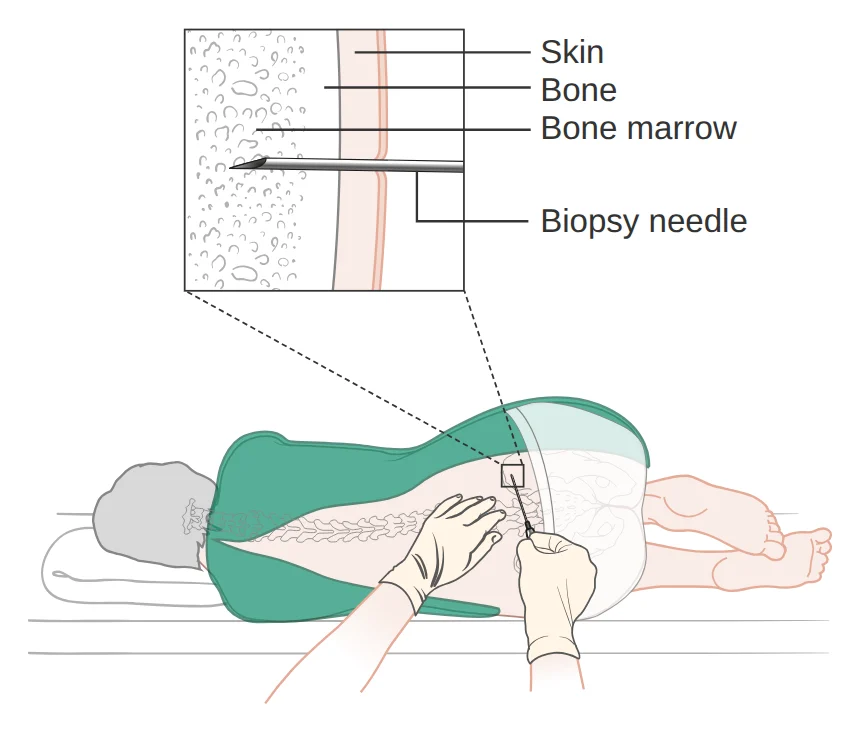
- The diagnosis is confirmed by looking at the cells under a microscope, flow cytometry and a bone marrow examination [1, 5].
Leukaemia blood test results: signs on a CBC
Blood cells are made in the bone marrow. In leukaemia, cancer cells build up in the bone marrow and take the place of healthy cells. So a CBC usually shows two kinds of change: an increase in one type of white cell and a fall in healthy cells, that is red cells (anaemia), platelets and neutrophils [2, 3].
| Finding on the test | What it means | Type of leukaemia where it is most often seen |
|---|---|---|
| A very high white cell count (especially above 30,000) | A raised white cell count is most often due to infection or stress; but a very high number deserves prompt checking [7] | All types; a count above 100,000 is almost always due to leukaemia or a similar bone marrow disease [7] |
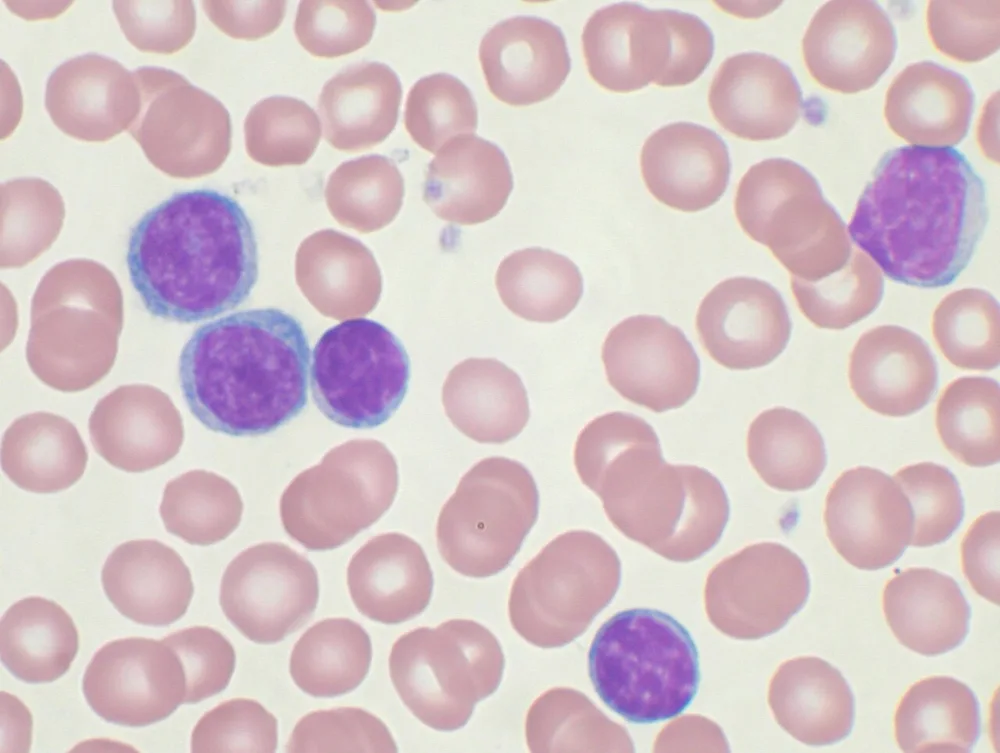
| Immature cells (blasts) on the blood film | Young cells that are not normally seen in the blood [1, 7] | Acute leukaemias [1, 2] |
| Anaemia (low haemoglobin) | Leukaemia cells have crowded out red cell production; it causes tiredness and paleness [2, 3] | Acute leukaemias; sometimes CLL [2, 3] |
| Low platelets | Risk of bruising and bleeding [2, 3] | Acute leukaemias; sometimes CLL [2, 3] |
| Low neutrophils | The white cells that fight germs are reduced; risk of infection [2] | Acute leukaemias [2] |
| High lymphocytes that have stayed high for months | If they stay high for at least 3 months and the cells are all of one type, it is a sign of CLL [5] | CLL [5] |
| A high white cell count with immature and mature forms, sometimes with high basophils or eosinophils | The typical picture of chronic myeloid leukaemia [4] | CML [4] |
| High monocytes that have stayed high for months | Usually due to an infection or inflammation; sometimes a sign of a disease in the family of chronic leukaemias [6, 7] | Chronic myelomonocytic leukaemia (CMML) [6] |
No single finding is a diagnosis; the doctor looks at the whole blood count together with symptoms and examination.
 (full-size image, opens in a new tab)
Blood test results in each type of leukaemia
Acute leukaemias (AML and ALL)
Symptoms usually develop over a few weeks: tiredness, fever, infections, paleness and bleeding [1, 2]. On a CBC, red cells, platelets and neutrophils are usually low, and sometimes the white cell count is very high. Blasts may be seen on the blood film [1, 2]. Acute leukaemia is urgent and needs to be checked quickly.
Chronic lymphocytic leukaemia (CLL)
At first it often causes no symptoms and is found on a routine blood test [3]. In a large study in the UK, almost half of the people with chronic leukaemias had none of the known symptoms, and the disease was probably found by chance on a blood test. In many people with CLL, lymphocytes had been high for several years before the diagnosis [8]. CLL usually progresses slowly [3]. Read more: the best treatment for CLL.
Chronic myeloid leukaemia (CML)
Sometimes it causes no symptoms at all. The most common finding on examination is an enlarged spleen. In the blood, white cells increase and every stage of their development, from immature to mature, is seen; sometimes basophils or eosinophils are also high [4]. Read more: treating CML with one tablet.
What is the ESR level in leukaemia?
ESR (erythrocyte sedimentation rate) is one of the tests for inflammation; it is not specific to leukaemia and has no particular value for it [9]. In a large study, ESR was raised in fewer than half of the people who had cancer, so a normal ESR does not rule cancer out [9].
In multiple myeloma (a cancer of plasma cells), ESR is one of the first tests, but it is requested together with special blood protein tests [10]. Read more: symptoms of multiple myeloma.
How do you test for leukaemia after an abnormal CBC?
- 1
- 2
- 3
- 4
- 5
Referral to a blood specialist
If there are signs of a blood disease, or the cause of the changes is not clear, your doctor will refer you to a blood specialist (haematologist) [7]. To go through your report line by line, see how to read a CBC.
 (full-size image, opens in a new tab)
Which blood results should I show a doctor the same day?
| Test result | What should I do? |
|---|---|
| Blasts (immature cells) in the blood film report | Contact your doctor the same day [7] |
| A white cell count above 100,000 | Contact your doctor the same day [2, 7] |
| Neutrophils below 500, or low neutrophils with a fever, mouth ulcers or an infection | See a doctor the same day; if you have a fever, go to an emergency department [11] |
| A high or low white cell count together with anaemia or abnormal platelets | See a doctor as soon as you can [7, 11] |
| Any CBC change together with fever, bruising, bleeding, tiny red spots under the skin or swollen lymph nodes | See a doctor within the next day or two [7, 10] |
| Slightly high lymphocytes, no symptoms and the rest of the test normal | Usually not urgent; repeat the test as your doctor advises [3, 5] |
This table is a guide and does not replace your doctor's advice.
When should I see a doctor?
If you have any of these symptoms, see a doctor within the next day or two and have a CBC [10]:
- Paleness or lasting tiredness
- Unexplained fever, or infections that keep coming back or do not clear up
- Unexplained bruising or bleeding (gums, nose), or tiny red spots under the skin
- Swollen lymph nodes in several parts of the body, or a feeling of fullness under the ribs
In children, unexplained tiny red spots under the skin or an enlarged liver or spleen need immediate assessment by a specialist [10].
Bleeding that will not stop, a high fever with shivering, shortness of breath or confusion needs urgent care; call your local emergency number.
Frequently asked questions
What does a positive leukaemia blood test mean?
My white blood cell count is high; is it cancer?
Most of the time, no. Infection is one of the most common causes of a high white cell count. Stress, hard exercise, surgery, smoking, obesity, pregnancy and medicines such as steroids also raise it [7]. A mild to moderate rise is usually due to these causes. But a very high white cell count, immature cells on the blood film, or a rise that comes with anaemia, abnormal platelets, fever, weight loss or bruising should be checked promptly [7].
My lymphocytes are high; does that mean I have CLL?
Usually not. Viral infections, whooping cough and allergic reactions can also raise lymphocytes [7]. For a diagnosis of CLL, the B lymphocyte count must be at least 5,000 per microlitre, stay high for at least 3 months, and flow cytometry must show that the cells are all of one type [5]. Sometimes a smaller number of these cells is found; this is called monoclonal B-cell lymphocytosis. Each year, only 1 to 2 in 100 of these people go on to CLL that needs treatment, and the rest are simply followed up [5].
If my CBC is normal, can I still have blood cancer?
In leukaemia, the CBC is almost always abnormal [8]. But for other blood cancers, such as lymphoma and multiple myeloma, a CBC is not enough: in lymphoma, unexplained swollen lymph nodes or an enlarged spleen need to be checked, and in myeloma, special blood protein tests are needed [10]. Read: symptoms of lymphoma.
Does a CBC also show leukaemia in children?
Yes, a CBC is the first test. A child who is pale or tired, or has a lasting fever or infection, bone pain, unexplained bruising or bleeding, or swollen lymph nodes, should have a CBC within a day or two [10]. Read: symptoms of cancer in children.
What are the body symptoms of leukaemia?
Tiredness, paleness, fever and repeated infections, easy bruising and bleeding, and sometimes night sweats, weight loss and swollen lymph nodes [2, 3]. For the full list, read what are the symptoms of leukaemia? For blood tests for other cancers, see can a blood test detect cancer?
Laboratory findings and diagnostic criteria (for doctors)
For physicians
Leukocytosis. Leukocytosis in non-pregnant adults: WBC above 11.0 × 10⁹/L. Reactive leukocytosis is typically 11 to 30 × 109/L; 50 to 100 × 109/L (leukaemoid reaction) occurs in severe infections such as Clostridium difficile infection, sepsis, organ rejection or solid tumours, and above 100 × 109/L is almost always due to leukaemia or a myeloproliferative neoplasm. Red flags: WBC above 30 × 109/L (or above 20 × 109/L after initial management), predominantly immature cells or monomorphic lymphocytosis on the smear, low haemoglobin and abnormal platelets, together with fever, night sweats, weight loss, bruising, lymphadenopathy, petechiae or hepatosplenomegaly. Chronic leukaemias are most often diagnosed after incidental leukocytosis on a CBC in an asymptomatic person. Initial evaluation: repeat CBC with differential and review of the peripheral blood smear [7].
AML. Granulocytopenia, anaemia and thrombocytopenia are common; a WBC above 100,000/mm3 at diagnosis is an adverse prognostic factor; APL (both typical and microgranular) is commonly associated with DIC, and in microgranular APL the leukocyte count can be very high with a rapid doubling time [2]. WHO 5th edition: the shared criterion for AML is 20% or more blasts in blood or bone marrow, but most AML types with defining genetic abnormalities can be diagnosed with fewer than 20% blasts (except AML with BCR::ABL1 and AML with CEBPA mutation) [6].
CML and CMML. More than 95% of patients with CML have the Philadelphia chromosome (BCR::ABL1); a spectrum of mature and immature granulocytes with increased eosinophils or basophils is seen, and splenomegaly is the most common examination finding [4]. In the WHO 5th edition the accelerated phase of CML is omitted, and blast phase is defined by 20% or more myeloid blasts in blood or bone marrow, an extramedullary blast proliferation or increased lymphoblasts. CMML: persistent absolute (0.5 × 10⁹/L or more) and relative (10% or more) monocytosis with fewer than 20% blasts [6].
CLL and MBL (iwCLL 2018). Diagnosis of CLL: 5 × 10⁹/L or more B lymphocytes in the peripheral blood, sustained for at least 3 months, with clonality confirmed by light-chain restriction on flow cytometry; a panel of CD19, CD5, CD20, CD23, κ and λ is usually sufficient; smudge cells (Gumprecht shadows) are common. A cytopenia caused by a typical marrow infiltrate establishes CLL regardless of the B-lymphocyte count. Clonal B lymphocytes below 5 × 10⁹/L without lymphadenopathy, organomegaly, cytopenias or symptoms: MBL, with progression to CLL requiring treatment at 1% to 2% per year [5].
Primary care. In a CPRD case-control study (4,655 patients aged 40 or over; 2,877 chronic and 937 acute leukaemias), no symptom or symptom combination had a PPV above 1%; only 51% of patients with chronic leukaemia had a symptom in the final model (about half were found by chance), and lymphocytes were raised up to 5 years before a CLL diagnosis [8]. NICE NG12: consider a very urgent FBC (within 48 hours) in adults with pallor, persistent fatigue, unexplained fever, persistent or recurrent infection, generalised lymphadenopathy, unexplained bruising, bleeding or petechiae, or hepatosplenomegaly; refer children with unexplained petechiae or hepatosplenomegaly for immediate specialist assessment [10]. Neutropenia: an ANC below 500/µL, recurrent or severe infections, fevers, oral ulcers, organomegaly, lymphadenopathy or another cytopenia call for urgent haematology referral [11].
Scientific evidence
Scientific evidence
2 itemsiwCLL guidelines for diagnosis, indications for treatment, response assessment, and supportive management of CLL
The 5th edition of the World Health Organization Classification of Haematolymphoid Tumours: Myeloid and Histiocytic/Dendritic Neoplasms
Related cancer types
Related questions
References
11 referencesShow all references, 2 with a study cardClose the reference list
Numbers in the text, such as [1], refer to these sources. Sources with a “Study card” button are summarised in the site’s evidence library.
- 1
- 2
- 3
- 4
- 5
- 6
- 7
- 8
- 9
- 10
- 11
This page is based on reputable scientific sources and was last updated on 28 October 2026. The content of this website is for educational and informational purposes only and does not replace consultation, diagnosis or treatment by a specialist physician. Consult your treating physician about any treatment decision.
Printed from the website; the full and up-to-date version: https://drdabiri.com/en/questions/leukemia-blood-test-cbc/