All three are blood cancers, but they start in different places. Leukaemia is a cancer of the blood-forming cells in the bone marrow, and its cancer cells are also found in the blood [1, 3]. Lymphoma starts in the lymph system, mostly in the lymph nodes [2, 6]. Multiple myeloma, which many people call "bone marrow cancer", is a cancer of the plasma cells (the cells that make antibodies) in the bone marrow and forms tumours in the bones [7]. All three are cancers, but their symptoms, tests and treatment are different.
Key points
- Leukaemia is a broad term for cancers of the blood cells; its type depends on which blood cell has become cancerous and whether it grows quickly or slowly [1].
- Lymphoma is a broad term for cancers that start in the lymph system; it has two main types: Hodgkin lymphoma and non-Hodgkin lymphoma [2].
- Multiple myeloma is a cancer of the plasma cells in the bone marrow that forms tumours in many bones [7]; it is different from cancer of the bone itself [10].
- All three are cancers (malignant) [1, 2, 7]; the chance of cure depends on the exact type, and Hodgkin lymphoma, for example, can often be cured [2].
- Leukaemia is seen most often in adults older than 55, but it is also the most common cancer in children younger than 15 [1].
Leukaemia, lymphoma and myeloma: where does each one start?
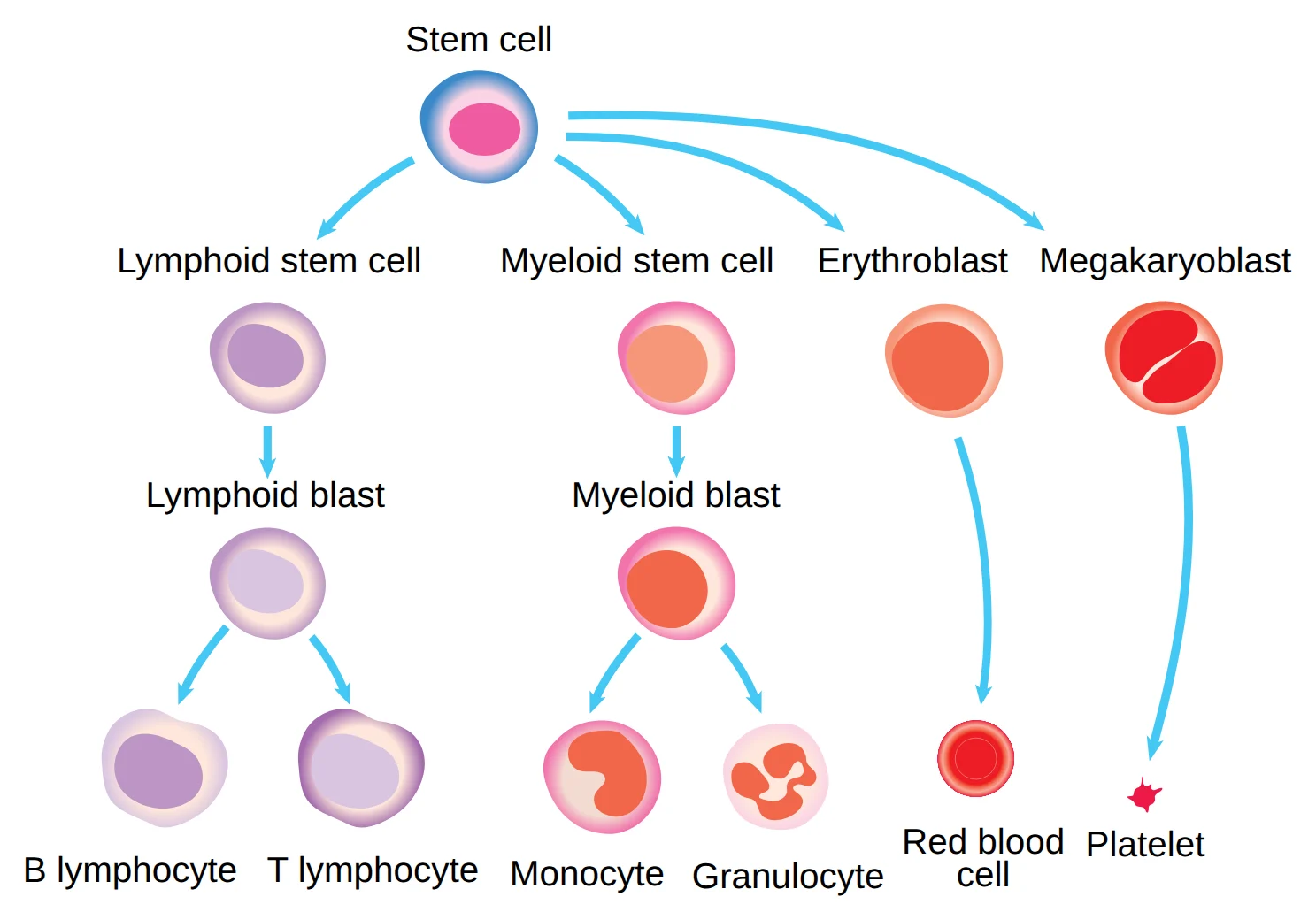
All blood cells are made in the bone marrow, a soft tissue in the centre of most bones [3]. In the bone marrow, a blood stem cell develops along one of two lines [3]:
- The myeloid line: makes red blood cells, platelets and most white blood cells.
- The lymphoid line: makes lymphocytes, white blood cells that work in the blood and the lymph system [4].
A blood cancer happens when one of these cells changes and multiplies out of control. The name of the disease depends on which cell has become cancerous and where the cancer mostly is [1, 2, 7].
 (full-size image, opens in a new tab)
| Disease | Where it starts | Which cell becomes cancerous | Examples |
|---|---|---|---|
| Leukaemia (blood cancer) | Bone marrow; the cancer cells also build up in the blood [3] | Blood-forming cells, from the myeloid or lymphoid line [3] | Acute myeloid leukaemia, acute lymphoblastic leukaemia, chronic myeloid leukaemia, chronic lymphocytic leukaemia [1] |
| Lymphoma | The lymph system, mostly the lymph nodes [2, 6] | Lymphocytes; most non-Hodgkin lymphomas start in B lymphocytes [6] | Hodgkin lymphoma; non-Hodgkin lymphomas such as diffuse large B-cell lymphoma and follicular lymphoma [2, 6] |
| Multiple myeloma ("bone marrow cancer") | Bone marrow; tumours in many bones [7] | Plasma cells, which develop from B lymphocytes and make antibodies [7] | Multiple myeloma; and MGUS, which is not cancer but can become cancer [7] |
| Myelodysplastic syndrome (MDS) | Bone marrow [8] | Immature blood cells that do not mature into healthy cells [8] | Sometimes turns into acute myeloid leukaemia [8] |
| Myeloproliferative neoplasms (MPN) | Bone marrow [9] | The bone marrow makes too many red cells, white cells or platelets [9] | Chronic myeloid leukaemia, polycythaemia vera, essential thrombocythaemia, primary myelofibrosis [9] |
This table is simplified; each group has many types, described on the page for each disease [11, 12].
What is leukaemia? Is leukaemia a cancer?
Yes; leukaemia is a broad term for cancers of the blood cells [1]. In leukaemia, the bone marrow makes a large number of abnormal blood cells [3]. As these cancer cells build up in the blood and bone marrow, there is less room for healthy red cells, white cells and platelets; this can lead to anaemia, infections and bleeding easily [3].
The name of each leukaemia has two parts:
- Acute or chronic: acute leukaemia usually gets worse quickly if it is not treated [3]; chronic leukaemia usually progresses slowly [4, 5].
- Myeloid or lymphoid: which line of blood cells the cancer started in [3].
So the four main types of leukaemia are acute myeloid leukaemia, acute lymphoblastic leukaemia, chronic myeloid leukaemia and chronic lymphocytic leukaemia [1]. Read more: Leukaemia, Symptoms of leukaemia and Is leukaemia curable?
What is lymphoma? Is lymphoma the same as leukaemia?
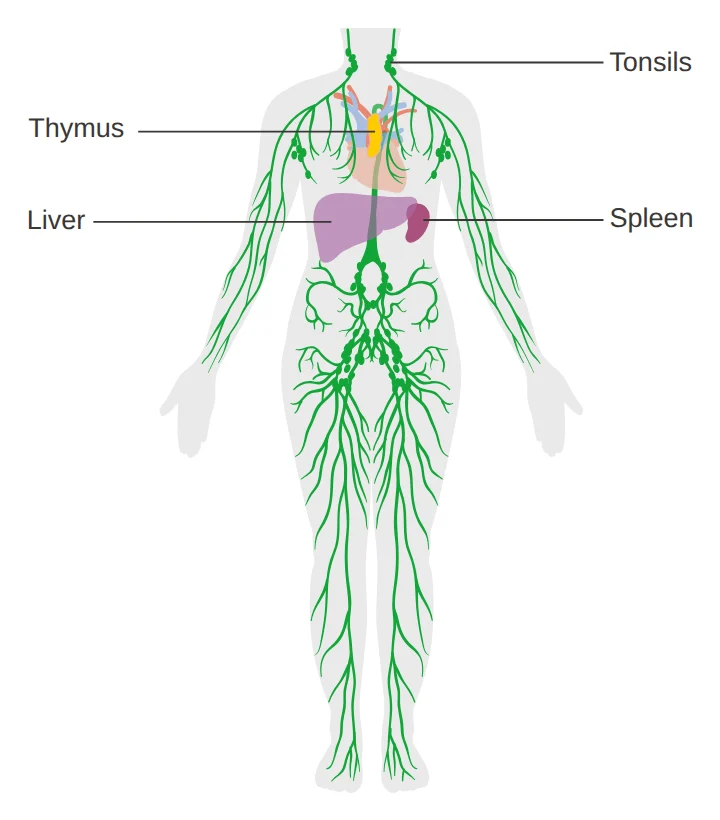
Lymphoma is also a cancer, but it is not the same as leukaemia. Lymphoma is a broad term for cancers that start in the lymph system [2], that is, in the lymph nodes and other tissues of the immune system, mostly from B lymphocytes [6]. That is why one of its main symptoms is swollen lymph nodes in the neck, armpit, groin or abdomen [6]. It has two main types: Hodgkin lymphoma and non-Hodgkin lymphoma [2].
Leukaemia and lymphoma are related, because both often start in white blood cells [3, 6]; sometimes the line between them is close. For example, in the World Health Organization classification, chronic lymphocytic leukaemia and small lymphocytic lymphoma are counted as one single disease [12].
Read more: Lymphoma, Symptoms of lymphoma and Is lymphoma curable?
 (full-size image, opens in a new tab)
What is "bone marrow cancer"? Is it the same as leukaemia?
"Bone marrow cancer" is not an exact medical term. In everyday speech it usually means multiple myeloma, and sometimes leukaemia, because both start in the bone marrow [3, 7].
Multiple myeloma is a cancer of plasma cells. Plasma cells develop from B lymphocytes, and their job is to make antibodies to fight infection [7]. In myeloma, abnormal plasma cells build up in the bone marrow, form tumours in many bones and make a useless protein called "M protein" [7]. So myeloma is different from leukaemia, but both are in the bone marrow, and diagnosing either one needs blood tests and a bone marrow sample [3, 7].
Myeloma is also different from cancer of the bone itself: primary bone cancer is a type of sarcoma and is rare; in adults, cancer that has spread to the bone from somewhere else (bone metastases) is much more common than primary bone cancer [10].
Read more: Multiple myeloma and Symptoms of multiple myeloma.
What are myelodysplastic syndromes and myeloproliferative neoplasms?
These are also bone marrow diseases, though less well known:
- Myelodysplastic syndrome (MDS): a group of cancers in which immature blood cells in the bone marrow do not mature into healthy cells [8]. Its symptoms include tiredness and shortness of breath, and the risk is higher with older age and after previous chemotherapy or radiotherapy [8]. Some types can turn into acute myeloid leukaemia [8].
- Myeloproliferative neoplasms (MPN): diseases in which the bone marrow makes too many red cells, white cells or platelets [9]; for example polycythaemia vera (too many red cells), essential thrombocythaemia (too many platelets), primary myelofibrosis and chronic myeloid leukaemia [9]. In some patients these diseases can turn into acute leukaemia [9, 11].
How do the symptoms, diagnosis and treatment of these diseases differ?
| Leukaemia | Lymphoma | Multiple myeloma | |
|---|---|---|---|
| Common symptoms | Fever, tiredness, paleness, infections, bruising or bleeding easily [3] | Swollen lymph nodes in the neck, armpit or groin; fever, drenching night sweats, weight loss, tiredness [6] | Bone pain, especially in the back or ribs, bones that break easily, frequent infections, tiredness [7] |
| Main tests for diagnosis | Blood tests and bone marrow tests [3] | A lymph node biopsy; a PET scan to see how far the disease has spread [6] | Blood, urine and bone marrow tests [7] |
| Main treatments | Chemotherapy, targeted therapy (such as tablets in chronic myeloid leukaemia), stem cell transplant; in some chronic types, monitoring only at first [3, 4, 5] | Chemotherapy, immunotherapy, targeted therapy, radiotherapy, stem cell transplant; in slow-growing types, sometimes monitoring only [6] | A combination of several medicines (targeted therapy, immunotherapy, steroids), high-dose chemotherapy with a stem cell transplant, radiotherapy [7] |
Each patient's treatment depends on the exact type of disease, its stage, genetic tests and general health.
What causes blood cancer and bone marrow cancer?
These cancers develop when changes happen in the genes of a blood cell and upset the way it grows and divides [3]. They can appear in someone who has no known risk factor, and having a risk factor does not mean you will definitely get the disease [3, 7]. The known risk factors are:
- Acute myeloid leukaemia: older age, being male, smoking, previous chemotherapy or radiotherapy, exposure to radiation or to the chemical benzene, a history of a blood disorder such as myelodysplastic syndrome, and some inherited conditions [3]. Smoking is one risk factor that can be changed [3].
- Multiple myeloma: middle or older age, being male, being Black, a history of MGUS or plasmacytoma, and exposure to radiation or certain chemicals [7].
- Myelodysplastic syndrome: older age and previous chemotherapy or radiotherapy [8].
When should I contact my doctor?
These symptoms can have other causes too [7], but if they last for several weeks or get worse, see your doctor and ask for a blood test (full blood count):
- repeated fevers or infections that do not clear up, tiredness and paleness, bruising or bleeding easily [3]
- a lump in the neck, armpit or groin that is growing or has lasted for several weeks, drenching night sweats or unexplained weight loss [6]
- bone pain that does not go away, especially in the back or ribs, or a bone that breaks after only a minor knock [7]
Go to the emergency department the same day if bleeding will not stop, you have a high fever with shivering, you become confused, or your arms or legs suddenly become weak or numb. In an emergency, call your local emergency number.
Frequently asked questions
Is leukaemia a cancer?
Is lymphoma a cancer?
Is blood cancer the same as bone marrow cancer?
Is bone marrow cancer the same as bone cancer?
Is chronic lymphocytic leukaemia a leukaemia or a lymphoma?
Both. In the World Health Organization classification, chronic lymphocytic leukaemia and small lymphocytic lymphoma are counted as one single disease [12]. In this disease the bone marrow makes too many lymphocytes, and it usually progresses slowly [4]. Read: The best treatment for CLL.
Is MGUS a cancer?
No. In MGUS there is a small number of abnormal plasma cells in the bone marrow that make M protein, but there is no cancer [7]. In most people it stays the same and causes no problems, but in some it can turn into a cancer such as multiple myeloma [7]; so your doctor follows it with regular tests. Read: Multiple myeloma.
Which one is more curable?
It depends on the exact type of disease, not just its name. Read: Is leukaemia curable?, Is lymphoma curable? and the Blood cancers page.
The WHO-HAEM5 classification at a glance (for doctors)
For physicians
Myeloid neoplasms (WHO 5th edition, 2022). The term "myelodysplastic neoplasms" (still abbreviated MDS) replaced "myelodysplastic syndromes" to underline their neoplastic nature. Blast cutoffs were eliminated for most AML types with defining genetic abnormalities, but the 20% blast cutoff to separate MDS from AML was retained. CML is defined by the BCR::ABL1 fusion resulting from t(9;22)(q34;q11), and the accelerated phase is no longer required; blast phase criteria are ≥20% myeloid blasts in the blood or bone marrow, an extramedullary proliferation of blasts, or increased lymphoblasts. The MPN family comprises CML, polycythaemia vera, essential thrombocythaemia, primary myelofibrosis, chronic neutrophilic leukaemia, chronic eosinophilic leukaemia, juvenile myelomonocytic leukaemia and MPN, not otherwise specified. CHIP is formally defined (somatic mutations of myeloid malignancy-associated genes at a VAF ≥2%, or ≥4% for X-linked genes in males, without unexplained cytopenia), and CCUS is CHIP with one or more persistent unexplained cytopenias [11].
Lymphoid neoplasms. CLL/SLL is a single entity. Three MBL subtypes are recognised: low-count MBL (clonal CLL/SLL-phenotype B cells below 0.5×10⁹/L), CLL/SLL-type MBL (clonal B cells ≥0.5×10⁹/L and total B cells below 5×10⁹/L, with no other features diagnostic of CLL/SLL) and non-CLL/SLL-type MBL. B-PLL is no longer a separate entity; CLL with ≥15% prolymphocytes is called prolymphocytic progression of CLL. For full prognostic evaluation of CLL/SLL, besides del(11q), del(13q), del(17p) and trisomy 12, TP53 mutation analysis, IGHV mutation status and B-cell receptor stereotype subset analysis (subset #2) are essential. NLPHL remains in the Hodgkin lymphoma family, but the name "nodular lymphocyte predominant B-cell lymphoma" is now considered acceptable [12].
Scientific evidence
Scientific evidence
3 itemsThe 5th edition of the World Health Organization Classification of Haematolymphoid Tumours: Myeloid and Histiocytic/Dendritic Neoplasms
The 5th edition of the World Health Organization Classification of Haematolymphoid Tumours: Lymphoid Neoplasms
International Myeloma Working Group updated criteria for the diagnosis of multiple myeloma
Related cancer types
Related questions
References
12 referencesShow all references, 2 with a study cardClose the reference list
Numbers in the text, such as [1], refer to these sources. Sources with a “Study card” button are summarised in the site’s evidence library.
- 1
- 2
- 3
- 4
- 5
- 6
- 7
- 8
- 9
- 10
- 11
- 12
This page is based on reputable scientific sources and was last updated on 28 October 2026. The content of this website is for educational and informational purposes only and does not replace consultation, diagnosis or treatment by a specialist physician. Consult your treating physician about any treatment decision.
Printed from the website; the full and up-to-date version: https://drdabiri.com/en/questions/types-of-blood-cancer/