A benign tumour does not grow into nearby tissue or spread to other parts of the body, and it usually does not grow back after it is removed; a malignant tumour (cancer), however, can invade nearby tissue, and its cells can travel through the blood or lymph to distant organs and form new tumours (metastasis) [1]. "Benign" does not always mean harmless; some benign tumours, such as brain tumours, can cause serious symptoms or be life-threatening [1]. In most cases, only a biopsy and examination of the tissue under a microscope can tell the type of tumour with certainty [5].
Benign and malignant tumours compared
| Feature | Benign tumour | Malignant tumour (cancer) |
|---|---|---|
| Growth into nearby tissue | No [1] | Can invade nearby tissue [1] |
| Spread to distant sites (metastasis) | No [1] | Cells can travel through the blood or lymph to distant sites [1] |
| Regrowth after removal | Usually does not grow back [1] | Sometimes comes back [1] |
| Risk to health | Usually low, but can be serious depending on size and location (for example the brain) [1] | Depends on type and stage; needs specialist treatment |
| Familiar examples | Most thyroid nodules [3]; bowel polyps (some are precancerous) [4] | Breast, bowel, lung cancers and others |
Only a doctor can determine the exact type of a tumour, by examining the tissue.
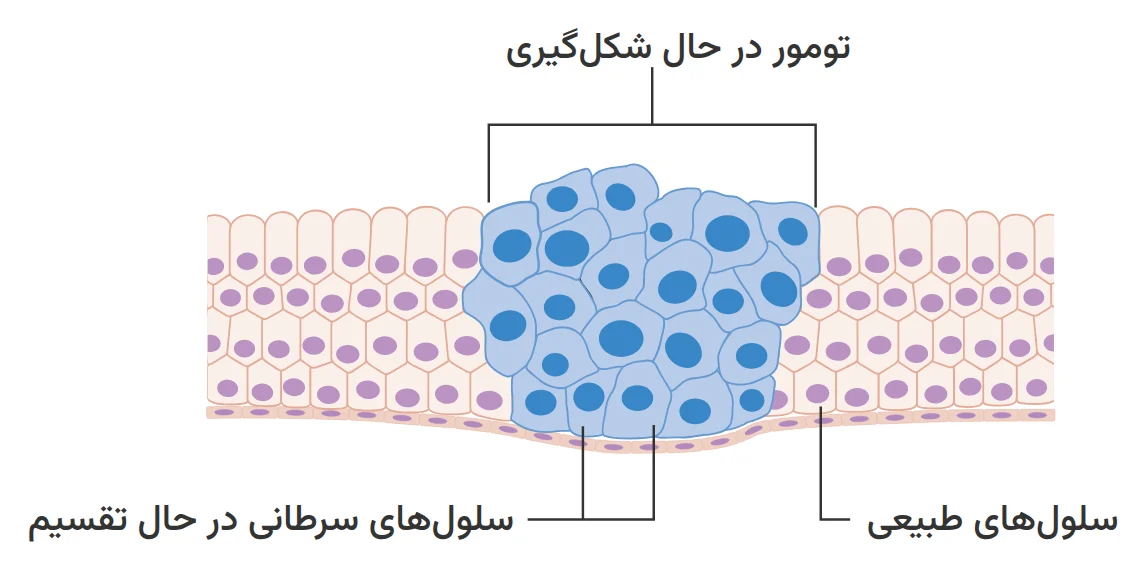
How does the doctor find out the type of tumour?
- 1
Examination and imaging
Ultrasound, CT, MRI, nuclear scans and PET give a detailed picture of a lump, but they must be interpreted together with other methods [5].
- 2
Laboratory tests
They may be normal despite cancer and abnormal in healthy people; so on their own they do not make the diagnosis [5].
- 3
Biopsy
In most cases, doctors need a biopsy to be sure cancer is present; a pathologist examines the tissue under a microscope and records the result in a pathology report [5].
When should I call my doctor?
Show your doctor any new lump (in the breast, neck, testicle, armpit or anywhere else), a lump that is getting bigger, a change in a mole, a sore that does not heal, unusual bleeding and unexplained weight loss. Most lumps are benign, but a diagnosis is only possible with an examination and the right tests.
Related questions
Can a benign tumour become malignant?
Some benign or precancerous lesions can become cancerous over time; for example, most bowel cancers start from benign polyps, and removing polyps during screening prevents cancer [4].
My doctor says my lesion is "carcinoma in situ"; does that mean I have cancer?
Does a biopsy make a tumour spread?
The risk is very low. Read more: Does a biopsy make cancer spread?
References
6 referencesShow all references, 4 with a study cardClose the reference list
Numbers in the text, such as [1], refer to these sources. Sources with a “Study card” button are summarised in the site’s evidence library.
- 1
- 2Hallmarks of Cancer: New Dimensions
- 3ACR Thyroid Imaging, Reporting and Data System (TI-RADS): White Paper of the ACR TI-RADS Committee
- 4Colorectal cancer
- 5
- 6Breast cancer
This page is based on reputable scientific sources and was last updated on 28 October 2026. The content of this website is for educational and informational purposes only and does not replace consultation, diagnosis or treatment by a specialist physician. Consult your treating physician about any treatment decision.
Printed from the website; the full and up-to-date version: https://drdabiri.com/en/questions/benign-vs-malignant-tumor/