Immunotherapy is a type of cancer treatment that helps the body's immune system recognise cancer cells better and fight them [1]. Its main types are immune checkpoint inhibitors (such as pembrolizumab and nivolumab), T-cell therapy (such as CAR-T), monoclonal antibodies, treatment vaccines and immune system modulators [1, 2, 3]. Many of its side effects come from the boosted immune system acting against healthy tissue, and they can appear at any time, even after treatment ends [4].
How does immunotherapy work?
The immune system normally finds and destroys abnormal cells and probably prevents many cancers from growing. Immune cells in and around a tumour (tumour-infiltrating lymphocytes, or TILs) are a sign of an immune response, and patients whose tumours contain TILs often have a better outlook [1].
But cancer cells have ways of escaping: genetic changes that make them less visible, proteins on their surface that switch immune cells off, and changes to the normal cells around the tumour that disrupt the immune response. Immunotherapy helps the immune system work better [1].
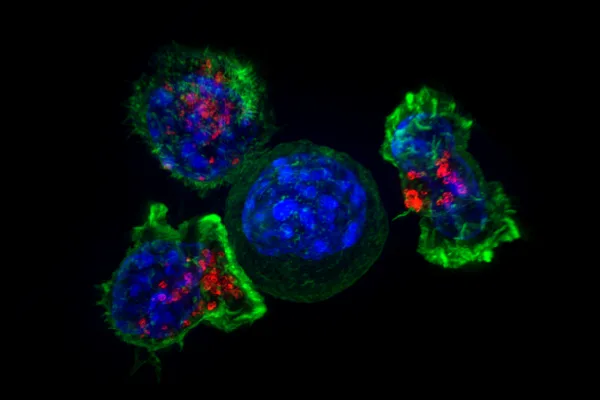
Types of immunotherapy
| Type | How does it work? | Example |
|---|---|---|
| Immune checkpoint inhibitors | Checkpoints that normally hold back the immune response are blocked so that immune cells attack the cancer more strongly [1] | Pembrolizumab (anti-PD-1) [2]; nivolumab and ipilimumab [3] |
| T-cell therapy (adoptive cell transfer) | The patient's immune cells are selected or modified in the laboratory, multiplied and infused back [1] | Anti-CD19 CAR-T in lymphoma [5] |
| Monoclonal antibodies | Laboratory-made proteins that attach to a specific target on cancer cells and mark them for the immune system [1] | — |
| Treatment vaccines | Strengthen the immune response against cancer cells and differ from preventive vaccines [1] | — |
| Immune system modulators | Boost the body's immune response specifically or in general [1] | — |
Immunotherapy may be given intravenously, by mouth, topically (a skin cream in very early skin cancers) or into the bladder [1].
For physicians
- Lung cancer (KEYNOTE-024): in 305 patients with advanced non-small cell lung cancer and PD-L1 of at least 50%, median progression-free survival was 10.3 months with pembrolizumab vs 6.0 months with chemotherapy, overall survival was also longer, and grade 3 to 5 treatment-related adverse events were less common (26.6% vs 53.3%) [2].
- Melanoma (CheckMate 067): after at least 10 years of follow-up, median overall survival was 71.9 months with nivolumab plus ipilimumab, 36.9 months with nivolumab and 19.9 months with ipilimumab; in patients who were alive and progression-free at 3 years, 10-year melanoma-specific survival was 96% [3].
- Lymphoma (ZUMA-1): in refractory large B-cell lymphoma, CAR-T cell therapy with axicabtagene ciloleucel gave an objective response of 82% and complete response of 54%; at a median follow-up of 15.4 months, 40% of patients were still in complete response and 18-month survival was 52%; grade 3 or higher cytokine release syndrome occurred in 13% and grade 3 or higher neurological events in 28% [5].
Side effects of immunotherapy
Side effects may include skin reactions at the injection site (pain, swelling, redness, itching, rash), flu-like symptoms (fever, chills, weakness, dizziness, nausea, muscle and joint pain, tiredness, headache, shortness of breath, low or high blood pressure), fluid retention, palpitations, diarrhoea, infection and inflammation of organs. Severe or fatal reactions are rare [4].
For physicians
Based on the ASCO guideline for immune-related adverse events of checkpoint inhibitors: for grade 1 toxicity, treatment usually continues with close monitoring (except for some neurological, haematological and cardiac toxicities); for most grade 2 toxicities, treatment may be held and resumed when toxicity returns to grade 1 or less; grade 3 usually requires holding treatment and high-dose corticosteroids, with a steroid taper over at least 4 to 6 weeks; for grade 4, permanent discontinuation is recommended, except for endocrinopathies controlled with hormone replacement [6].
When should I call my doctor?
Immunotherapy side effects can appear at any time during treatment and even after it ends [4]. If you develop a new symptom such as fever, shortness of breath, diarrhoea, a widespread rash, palpitations, or weakness and dizziness, tell your treatment team without delay; depending on how severe they are, these side effects are managed with monitoring, pausing or stopping the medicine, and steroids if needed [4, 6].
Related questions
Is immunotherapy the same as chemotherapy?
Does immunotherapy work for all cancers?
No. Immunotherapy drugs are approved for many cancers, but they are not yet as widely used as surgery, chemotherapy or radiotherapy, and only some patients respond; predicting who will respond is still being researched [1].
Scientific evidence
Key studies in the evidence library
2 itemsFinal, 10-Year Outcomes with Nivolumab plus Ipilimumab in Advanced Melanoma
Pembrolizumab for Early Triple-Negative Breast Cancer
Related cancer types
Related questions
References
7 referencesShow all references, 4 with a study cardClose the reference list
Numbers in the text, such as [1], refer to these sources. Sources with a “Study card” button are summarised in the site’s evidence library.
- 1
- 2
- 3
- 4
- 5Axicabtagene Ciloleucel CAR T-Cell Therapy in Refractory Large B-Cell Lymphoma
- 6Management of Immune-Related Adverse Events in Patients Treated With Immune Checkpoint Inhibitor Therapy: ASCO Guideline Update
- 7Chemotherapy to Treat Cancer
This page is based on reputable scientific sources and was last updated on 28 October 2026. The content of this website is for educational and informational purposes only and does not replace consultation, diagnosis or treatment by a specialist physician. Consult your treating physician about any treatment decision.
Printed from the website; the full and up-to-date version: https://drdabiri.com/en/questions/what-is-immunotherapy/