Key points
- The first treatment for CML is a tablet, not chemotherapy. Tablets such as imatinib switch off the faulty protein behind this disease [4].
- With a tablet, more than 8 in 10 patients were alive after 10 years [2], and life expectancy today has come close to that of the general population [3].
- Take your tablet every day. Patients who skipped tablets were far less likely to get a good response [7].
- In some patients, after years of a deep response, the drug can be stopped under a doctor's supervision [4, 5].
The story of a tablet
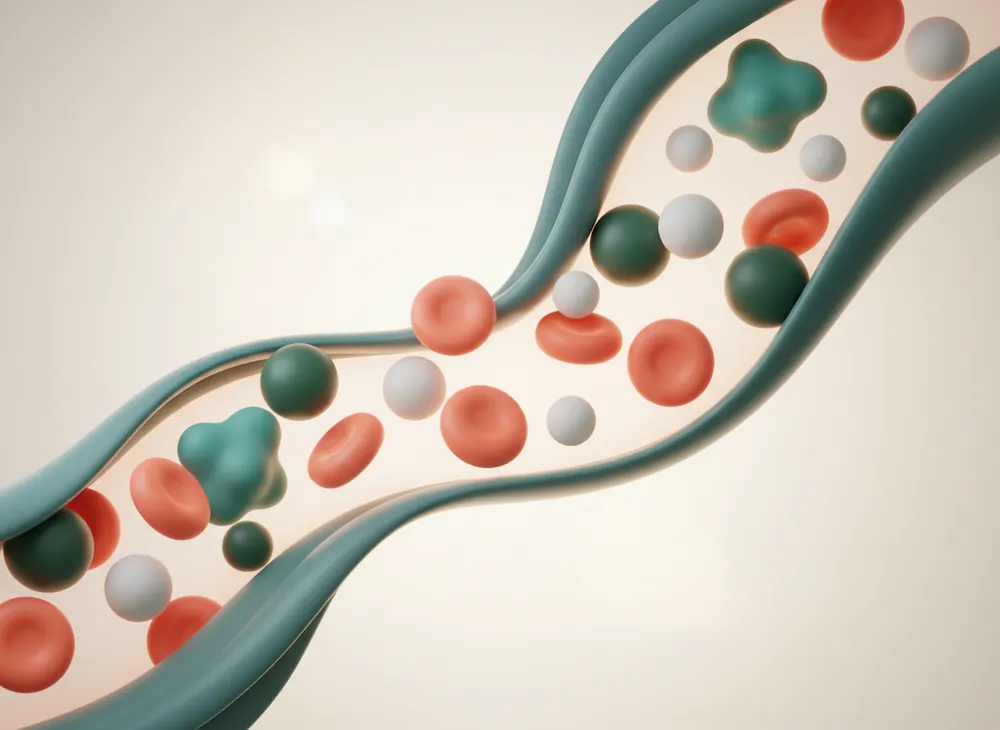
CML is a cancer of white blood cells that starts with a chromosome change called the "Philadelphia chromosome". This change makes a faulty protein that, like a stuck accelerator pedal, drives cells to multiply nonstop. Without effective treatment, the disease sooner or later reached an acute, fatal phase.
The old treatments (interferon and mild chemotherapy) got only a small proportion of patients to a good response. When imatinib tablets, which switch off exactly this faulty protein, were compared with those treatments, the result was astonishing: in most patients the diseased cells disappeared completely from the blood and bone marrow; with the old treatment, in only a few [1].
Ten years later, most patients who had taken imatinib (more than 8 in every 10) were alive [2]. In Sweden it was calculated that today this disease usually shortens a patient's life by less than 3 years; that is, patients live almost as long as everyone else [3].
Today's tablets
Today there are several tablets for the first treatment of CML: imatinib, the next-generation tablets (dasatinib, nilotinib, bosutinib) and the newest of them, asciminib [4]. All work, and the choice depends on other illnesses, side effects and the aim of treatment [4]. In a large study, asciminib got more patients to a deep response within a year and was stopped less often because of side effects [6].
The response to treatment is measured with a molecular blood test (PCR) at months 3, 6 and 12; if the response is not enough, your doctor changes the tablet [4].
The most important thing you can do: take your tablet every day
CML is one of the diseases in which the result of treatment depends more than anything on taking the tablet regularly. In one study, almost everyone who took their tablets regularly got a good response; but of those who skipped tablets now and then, only a few did [7]. So missing even one tablet a week can make a difference.
Simple tricks: a fixed time, a phone alarm, a weekly pill box, and getting your next supply before you run out (why complete, uninterrupted treatment matters).
Can the drug be stopped?
Yes, in some patients. If you have had a very deep and stable molecular response for several years, your doctor may stop the drug and monitor you with monthly tests [4]. In a large European study, half of these patients were still free of relapse 2 years after stopping the drug, and in the rest the disease was brought under control again by restarting the drug [5]. Never stop the drug yourself; stopping is safe only with regular tests and under a doctor's supervision.
When should I call my doctor?
Report fever or infection, bruising or bleeding, a lot of swelling or breathlessness, and chest pain early. If you have missed your tablets for a few days or side effects stop you taking them, call your doctor that week; another tablet may suit you better [4].
Frequently asked questions
Do I need chemotherapy or a bone marrow transplant?
For most patients in the chronic phase, no; the tablet is the main treatment. A transplant is considered for special cases such as disease resistant to several tablets or an advanced phase [4].
Which tablet is best?
Can I become pregnant?
These tablets carry risks in pregnancy; talk to your doctor before any plans for pregnancy so your treatment plan can be adjusted [4].
For physicians
Show detailsHide
IRIS: CCyR at 18 months 76.2% with imatinib versus 14.5% with interferon + cytarabine [1]; 10-year overall survival 83.3% [2]. Bower 2016: loss of life expectancy below 3 years for a 2013 diagnosis [3]. ELN 2025: imatinib, a second-generation TKI or asciminib first line; BCR::ABL1 monitoring at months 3, 6 and 12; TFR with a stable deep response [4]. EURO-SKI: 24-month molecular relapse-free survival 50% [5]. ASC4FIRST: MMR at week 48 67.7% versus 49.0%, and discontinuation for adverse events 4.5% [6]. Marin 2010: adherence ≤90% with 6-year MMR 28.4% versus 94.5% [7]. Doses: imatinib and CML regimens on the leukaemia page.
Scientific evidence
Show detailsHide
Scientific evidence
5 itemsImatinib Compared with Interferon and Low-Dose Cytarabine for Newly Diagnosed Chronic-Phase Chronic Myeloid Leukemia
Long-Term Outcomes of Imatinib Treatment for Chronic Myeloid Leukemia
2025 European LeukemiaNet recommendations for the management of chronic myeloid leukemia
Discontinuation of tyrosine kinase inhibitor therapy in chronic myeloid leukaemia (EURO-SKI): a prespecified interim analysis of a prospective, multicentre, non-randomised, trial
Asciminib in Newly Diagnosed Chronic Myeloid Leukemia
Read more
Related cancer types
Treatment guides
References
7 referencesShow all references, 5 with a study cardClose the reference list
Numbers in the text, such as [1], refer to these sources. Sources with a “Study card” button are summarised in the site’s evidence library.
- 1Imatinib Compared with Interferon and Low-Dose Cytarabine for Newly Diagnosed Chronic-Phase Chronic Myeloid Leukemia
- 2
- 3
- 4
- 5
- 6Asciminib in Newly Diagnosed Chronic Myeloid Leukemia
- 7
This page is based on reputable scientific sources and was last updated on 28 October 2026. The content of this website is for educational and informational purposes only and does not replace consultation, diagnosis or treatment by a specialist physician. Consult your treating physician about any treatment decision.
Printed from the website; the full and up-to-date version: https://drdabiri.com/en/articles/cml-treatment-life-expectancy/