Key points
- These drugs attach a powerful chemotherapy drug to an antibody; the antibody, like a "guided missile", finds the cancer cell and releases the drug right there [1].
- In advanced bladder cancer, one of these drugs combined with immunotherapy nearly doubled survival: patients typically lived about two and a half years, compared with about a year and four months with chemotherapy [8].
- In breast cancer, trastuzumab deruxtecan (Enhertu) worked even in tumours with a little HER2 (not completely negative); that is why your pathology report matters [2, 4, 5, 11].
- These drugs are now used as the first treatment for disease that has spread, and even at stages where cure is the aim in several cancers [9, 11].
- Their important side effect is lung damage; report a new cough, breathlessness or fever straight away [2, 11].
- Overall survival: how long patients lived.
- Progression-free survival: how long the disease did not get worse.
- Disease-free or event-free survival: how long the disease did not come back after treatment.
- Median: the number that half of patients were above and half below; for example, "a median of 10 months" means that in half of patients the disease stayed under control for at least 10 months.
- Phase 3: a large, careful study comparing a new drug with the usual treatment; the basis of most approvals.
Talk to your doctor about what this result means for you.
What is an ADC and what problem does it solve?
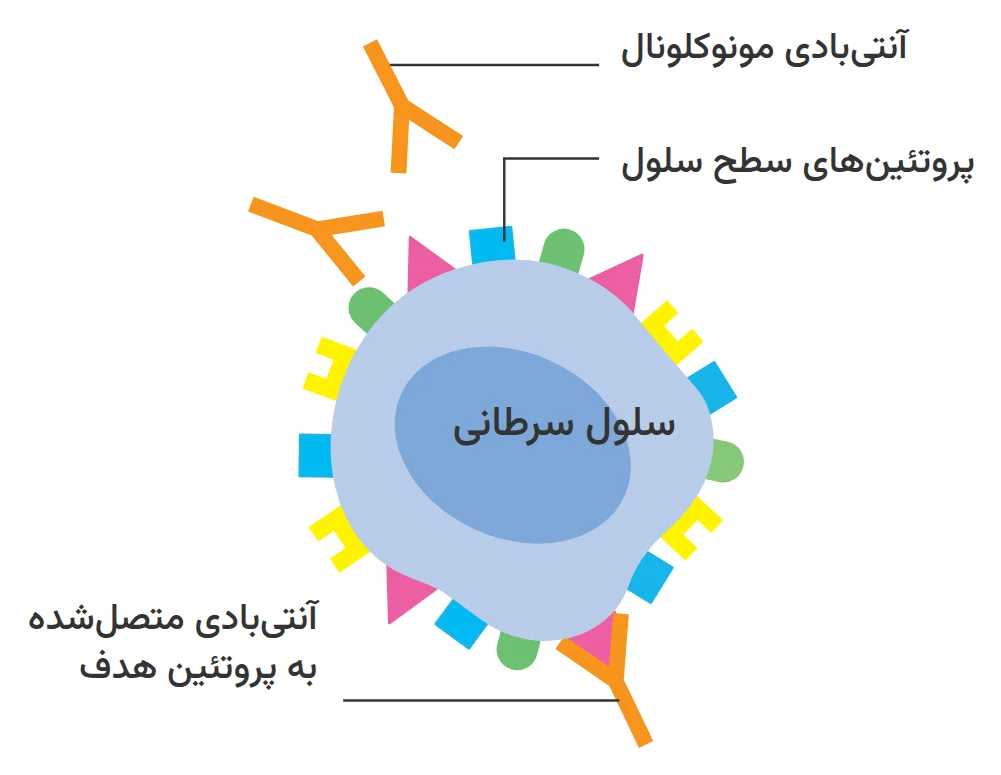
Classic chemotherapy targets dividing cells without much distinction between healthy and cancer cells, and this is its main limit on dose and side effects. Monoclonal antibodies, on the other hand, can recognise specific proteins on the surface of cancer cells with precision. An antibody–drug conjugate (ADC) combines the two: an antibody joined by a "linker" to a very powerful cell-killing drug (the payload) [1].
The aim of this design is to deliver a high concentration of drug inside the cancer cell and reduce the exposure of healthy tissues to it. After the first-generation drugs were approved, newer generations of ADCs with improved linkers and payloads have achieved striking results in large studies [1].
How does an ADC work?
What did the studies show?
For physicians
Bladder (urothelial) cancer: enfortumab vedotin + pembrolizumab
For decades no treatment improved overall survival in advanced urothelial cancer more than platinum chemotherapy. In the phase 3 EV-302 trial, 886 untreated patients were randomised to enfortumab vedotin plus pembrolizumab or to gemcitabine with cisplatin/carboplatin chemotherapy. Median progression-free survival was 12.5 versus 6.3 months and median overall survival 31.5 versus 16.1 months [8]. In the phase 3 KEYNOTE-905 trial, the same combination before and after surgery in patients with muscle-invasive bladder cancer who were unsuitable for cisplatin increased 2-year event-free survival from 39.4% to 74.7%, and pathological complete response was seen in 57.1% versus 8.6% of patients [9].
Breast cancer: trastuzumab deruxtecan
In the DESTINY-Breast04 trial, trastuzumab deruxtecan (T-DXd) in patients with metastatic breast cancer with "low" HER2 expression who had already had chemotherapy increased median overall survival to 23.4 months versus 16.8 months with the physician's choice of chemotherapy [2]. In DESTINY-Breast06, this drug before chemotherapy in hormone receptor-positive, HER2-low patients gave a median progression-free survival of 13.2 versus 8.1 months, and results in the HER2-"ultralow" group were consistent [3].
In HER2-positive breast cancer, the DESTINY-Breast09 trial showed that T-DXd with pertuzumab as first-line treatment for metastatic disease increased median progression-free survival to 40.7 months versus 26.9 months with the standard regimen of a taxane, trastuzumab and pertuzumab [4]. In DESTINY-Breast05, in high-risk patients with residual disease after neoadjuvant treatment, 3-year invasive disease-free survival was 92.4% with T-DXd versus 83.7% with trastuzumab emtansine (T-DM1) [5].
Triple-negative breast cancer: anti-Trop-2 ADCs
In the ASCENT trial, sacituzumab govitecan in patients with relapsed metastatic triple-negative breast cancer increased median overall survival from 6.7 to 12.1 months [6]. In ASCENT-04, sacituzumab govitecan with pembrolizumab as first-line treatment in PD-L1-positive patients gave a median progression-free survival of 11.2 months versus 7.8 months with chemotherapy and pembrolizumab [7]. In addition, datopotamab deruxtecan has been approved, based on the TROPION-Breast02 trial, for first-line treatment of metastatic triple-negative disease in patients who are not candidates for immunotherapy [11].
Beyond a single cancer type
In the phase 2 DESTINY-PanTumor02 trial, T-DXd in 267 patients with various HER2-expressing solid tumours (including endometrial, cervical, ovarian, bladder and biliary tract cancers) gave an objective response of 37.1%, with the greatest benefit in tumours with HER2 3+ intensity [10].
ADCs have now become main treatment options for many patients with breast and bladder cancer [8, 11]. Choosing the right ADC depends on the results of the tumour pathology tests (such as the level of HER2); so even if you were told before that you are "HER2-negative", your tumour may fall into the "HER2-low" group [2, 3].
When should I call my doctor?
Limitations and open questions
- Side effects: ADCs are not "side-effect free"; nausea, low white blood cells and diarrhoea are common, and interstitial lung disease can be serious and even fatal [2, 5, 6].
- Resistance and treatment sequence: it is not yet clear how well a second ADC with a similar payload (for example topoisomerase I inhibitors) will work after the disease progresses on one ADC [11].
- Long-term data: for some new uses, especially in early-stage disease and treatments around surgery, overall survival data are not yet complete [5, 11].
Outlook
Within a few years these drugs have gone from a "last resort" to the first treatment in many breast cancers, and they are now also used in early-stage disease with the aim of cure [11]. Together with immunotherapy, they have also done well in bladder cancer, both in advanced disease [8] and before and after surgery [9]. One of them is approved for any cancer with a lot of HER2 [10], and many studies are under way [11].
For physicians
Within a short time ADCs have moved from late-line treatments to preferred first-line options in the main breast cancer subtypes and to curative-intent treatments in early-stage disease [11]. The success of combining an ADC with immunotherapy in bladder cancer, both in advanced disease [8] and around surgery [9], is a model for other cancers. Tumour-agnostic use based on HER2 expression [10] and many ongoing neoadjuvant and adjuvant studies are likely to change treatment algorithms further in the coming years [11].
Trial details and safety (for physicians)
Show detailsHide
| Study | Phase | Patient population | Main result |
|---|---|---|---|
| EV-302 [8] | 3 | 886 patients with untreated advanced urothelial cancer | Overall survival 31.5 versus 16.1 months (hazard ratio 0.47) |
| KEYNOTE-905 [9] | 3 | 344 patients with muscle-invasive bladder cancer, mostly unsuitable for cisplatin | 2-year event-free survival 74.7% versus 39.4% (hazard ratio 0.40) |
| DESTINY-Breast04 [2] | 3 | 557 patients with HER2-low metastatic breast cancer | Overall survival 23.4 versus 16.8 months (hazard ratio 0.64) |
| DESTINY-Breast06 [3] | 3 | 866 HR-positive patients, HER2-low or ultralow | Progression-free survival 13.2 versus 8.1 months (hazard ratio 0.62) |
| DESTINY-Breast09 [4] | 3 | HER2-positive metastatic breast cancer, first line | Progression-free survival 40.7 versus 26.9 months (hazard ratio 0.56) |
| DESTINY-Breast05 [5] | 3 | 1635 HER2-positive patients with residual disease after neoadjuvant treatment | 3-year invasive disease-free survival 92.4% versus 83.7% (hazard ratio 0.47) |
| ASCENT [6] | 3 | 468 patients with relapsed metastatic triple-negative disease | Overall survival 12.1 versus 6.7 months (hazard ratio 0.48) |
| ASCENT-04 [7] | 3 | 443 PD-L1-positive triple-negative patients, first line | Progression-free survival 11.2 versus 7.8 months (hazard ratio 0.65) |
| DESTINY-PanTumor02 [10] | 2 | 267 patients with HER2-expressing solid tumours | Objective response 37.1%; 61.3% in centrally confirmed HER2 3+ |
- Treatment-related grade 3 or higher adverse events in EV-302 occurred in 55.9% of the EV + pembrolizumab group and 69.5% of the chemotherapy group [8]. In KEYNOTE-905, drug-related grade 3 or higher adverse events were reported in 45.5% of patients in the treatment group [9].
- Adjudicated T-DXd-related ILD was reported in 11.3% in DESTINY-Breast06 [3], 12.1% in DESTINY-Breast09 [4] and 9.6% versus 1.6% with T-DM1 in DESTINY-Breast05 [5].
- In DESTINY-Breast09, the T-DXd plus placebo arm remains blinded until the final analysis [4].
- In DESTINY-PanTumor02, in patients with centrally confirmed HER2 3+, median overall survival was 21.1 months [10].
Regimens and doses (for physicians)
Show detailsHide
Treatment regimens and doses: index4 regimens
- Interstitial lung disease (ILD)/pneumonitis: active ILD monitoring is essential for all approved ADCs [11]; patients should report any new cough, breathlessness or fever straight away [2, 11].
- Antiemetic prophylaxis: before each dose of trastuzumab deruxtecan [14] and sacituzumab govitecan (two- or three-drug antiemetic) [13].
Doses and schedules of the main ADCs (FDA labels)
Enfortumab vedotin + pembrolizumab (EV-302)
Locally advanced or metastatic urothelial cancerCycle length: Every 21 days
Locally advanced or metastatic urothelial cancer
Before prescribing: Shared safety points| Drug | Dose | Route | Schedule |
|---|---|---|---|
| Enfortumab vedotin | 1.25 mg/kg (maximum 125 mg) | IV infusion over 30 minutes | Days 1 and 8 |
| Pembrolizumab | 200 mg every 3 weeks (or 400 every 6 weeks) | IV over 30 minutes, after enfortumab vedotin | Day 1 |
Evidence: EV-302 (2025)
Perioperative enfortumab vedotin + pembrolizumab (KEYNOTE-905)
Muscle-invasive bladder cancer, cisplatin-ineligibleCycle length: Every 21 days
Muscle-invasive bladder cancer, cisplatin-ineligible
Before prescribing: Shared safety points| Drug | Dose | Route | Schedule |
|---|---|---|---|
| Before cystectomy, 3 cycles | |||
| Enfortumab vedotin | 1.25 mg/kg (maximum 125 mg) | IV infusion over 30 minutes | Days 1 and 8 |
| Before cystectomy | |||
| Pembrolizumab | 200 mg, 3 doses | IV over 30 minutes, after enfortumab vedotin | Day 1 |
| After cystectomy, 6 cycles | |||
| Enfortumab vedotin | 1.25 mg/kg (maximum 125 mg) | IV infusion over 30 minutes | Days 1 and 8 |
| After cystectomy | |||
| Pembrolizumab | 200 mg, 14 doses (or 400 mg, 7 doses) | IV over 30 minutes, after enfortumab vedotin | Day 1 |
In cisplatin-eligible patients: enfortumab vedotin 4 cycles before and 5 cycles after surgery; pembrolizumab 4 doses before and 13 doses after surgery [12, 15].
Evidence: KEYNOTE-905/EV-303 (2026)
Trastuzumab deruxtecan
HER2-positive, HER2-low or HER2-ultralow breast cancer; with pertuzumab first line in HER2-positive disease; after surgery for residual disease (14 cycles); HER2-positive gastric cancerCycle length: Every 21 days
HER2-positive, HER2-low or HER2-ultralow breast cancer; with pertuzumab first line in HER2-positive disease; after surgery for residual disease (14 cycles); HER2-positive gastric cancer
Before prescribing: Shared safety points| Drug | Dose | Route | Schedule |
|---|---|---|---|
| Breast and other uses | |||
| Trastuzumab deruxtecan | 5.4 mg/kg | IV infusion; first 90 minutes, then 30 minutes | Day 1 |
| Gastric | |||
| Trastuzumab deruxtecan | 6.4 mg/kg | Same | Day 1 |
| First line, HER2-positive | |||
| Pertuzumab | 840 then 420 mg | IV, 30 minutes after the ADC | Day 1 |
Asymptomatic ILD: hold until resolved; symptomatic ILD (grade 2 or higher): stop permanently and give corticosteroids [14].
Sacituzumab govitecan (± pembrolizumab)
Advanced triple-negative breast cancer: first-line single agent (not a candidate for a PD-1/PD-L1 inhibitor) or with pembrolizumab (PD-L1 CPS 10 or more), or after 2 or more systemic treatments; advanced HR-positive/HER2-negative disease after hormone therapy and at least 2 other systemic treatmentsCycle length: Every 21 days
Advanced triple-negative breast cancer: first-line single agent (not a candidate for a PD-1/PD-L1 inhibitor) or with pembrolizumab (PD-L1 CPS 10 or more), or after 2 or more systemic treatments; advanced HR-positive/HER2-negative disease after hormone therapy and at least 2 other systemic treatments
Before prescribing: Shared safety points| Drug | Dose | Route | Schedule |
|---|---|---|---|
| Sacituzumab govitecan | 10 mg/kg (never more) | IV infusion; first 3 hours, then 1 to 2 hours | Days 1 and 8 |
| Combination | |||
| Pembrolizumab | According to the pembrolizumab label | IV | — |
Premedication: antipyretic and H1 and H2 antihistamines. Primary G-CSF in patients at high risk of febrile neutropenia. Dose levels: 7.5 then 5 mg/kg. Homozygous UGT1A1*28 carriers have a higher risk of neutropenia; avoid UGT1A1 inhibitors and inducers [13].
Doses follow the trial protocol, guideline or official drug label (source given in the notes of each regimen). Before prescribing, check blood counts, renal and hepatic function, drug interactions and the patient’s condition, and adjust the dose according to the drug label.
Frequently asked questions
Is an ADC the same as chemotherapy?
What does "HER2-low" mean?
It describes tumours that score 1+ or 2+ on immunohistochemistry staining with a negative ISH test; these patients used not to benefit from anti-HER2 drugs, but they respond to trastuzumab deruxtecan [2].
Are ADCs only for breast cancer?
What is the most important side effect to watch for?
How are these drugs given?
ADCs are given as IV infusions in regular cycles; for example, enfortumab vedotin is given on days 1 and 8 of each three-week cycle [8].
Scientific evidence
Show detailsHide
Related studies
9 itemsTrastuzumab Deruxtecan in Previously Treated HER2-Low Advanced Breast Cancer
Trastuzumab Deruxtecan after Endocrine Therapy in Metastatic Breast Cancer
Trastuzumab Deruxtecan plus Pertuzumab for HER2-Positive Metastatic Breast Cancer
Trastuzumab Deruxtecan in Residual HER2-Positive Early Breast Cancer
Efficacy and Safety of Trastuzumab Deruxtecan in Patients With HER2-Expressing Solid Tumors: Primary Results From the DESTINY-PanTumor02 Phase II Trial
Perioperative Enfortumab Vedotin and Pembrolizumab in Bladder Cancer
Sacituzumab Govitecan in Metastatic Triple-Negative Breast Cancer
Sacituzumab Govitecan plus Pembrolizumab for Advanced Triple-Negative Breast Cancer
Enfortumab Vedotin and Pembrolizumab in Untreated Advanced Urothelial Cancer
References
15 referencesShow all references, 11 with a study cardClose the reference list
Numbers in the text, such as [1], refer to these sources. Sources with a “Study card” button are summarised in the site’s evidence library.
- 1
- 2
- 3
- 4
- 5
- 6
- 7Sacituzumab Govitecan plus Pembrolizumab for Advanced Triple-Negative Breast Cancer
- 8
- 9
- 10
- 11
- 12
- 13
- 14
- 15
This page is based on reputable scientific sources and was last updated on 28 October 2026. The content of this website is for educational and informational purposes only and does not replace consultation, diagnosis or treatment by a specialist physician. Consult your treating physician about any treatment decision.
Printed from the website; the full and up-to-date version: https://drdabiri.com/en/articles/antibody-drug-conjugates/