Learning objectives and key messages
- Know the main differences between WHO 2022 and ICC 2022: WHO sets no minimum blast count for most genetic subtypes, whereas ICC introduced a 10% threshold and a new MDS/AML category (10 to 19% blasts) [1, 2, 3].
- Apply ELN 2022 genetic risk correctly: FLT3-ITD is "intermediate" regardless of allelic ratio, and myelodysplasia-related mutations and TP53 with VAF ≥10% are "adverse" [3, 4].
- For patients receiving lower-intensity treatment (such as venetoclax + a hypomethylating agent), the separate ELN 2024 classification applies: TP53 adverse, FLT3-ITD or NRAS/KRAS intermediate [3, 5].
- Treatment intensity is chosen on the basis of fitness and disease biology; age over 75 is a relative contraindication to intensive chemotherapy, and venetoclax + azacitidine increased median overall survival from 9.6 to 14.7 months in VIALE-A [3, 6].
- Get the FLT3 result quickly: adding midostaurin (RATIFY) or, in FLT3-ITD, quizartinib (QuANTUM-First) to "7+3" improved survival [7, 8].
- After remission, favourable risk usually receives 3 to 4 cycles of high-dose cytarabine, and intermediate or adverse risk is a candidate for allogeneic transplant in first remission; MRD (especially NPM1) refines this decision [3, 9, 10].
Diagnostic assessment before starting treatment
Steps of the initial AML assessment
- 1
Confirm the diagnosis and urgently exclude APL
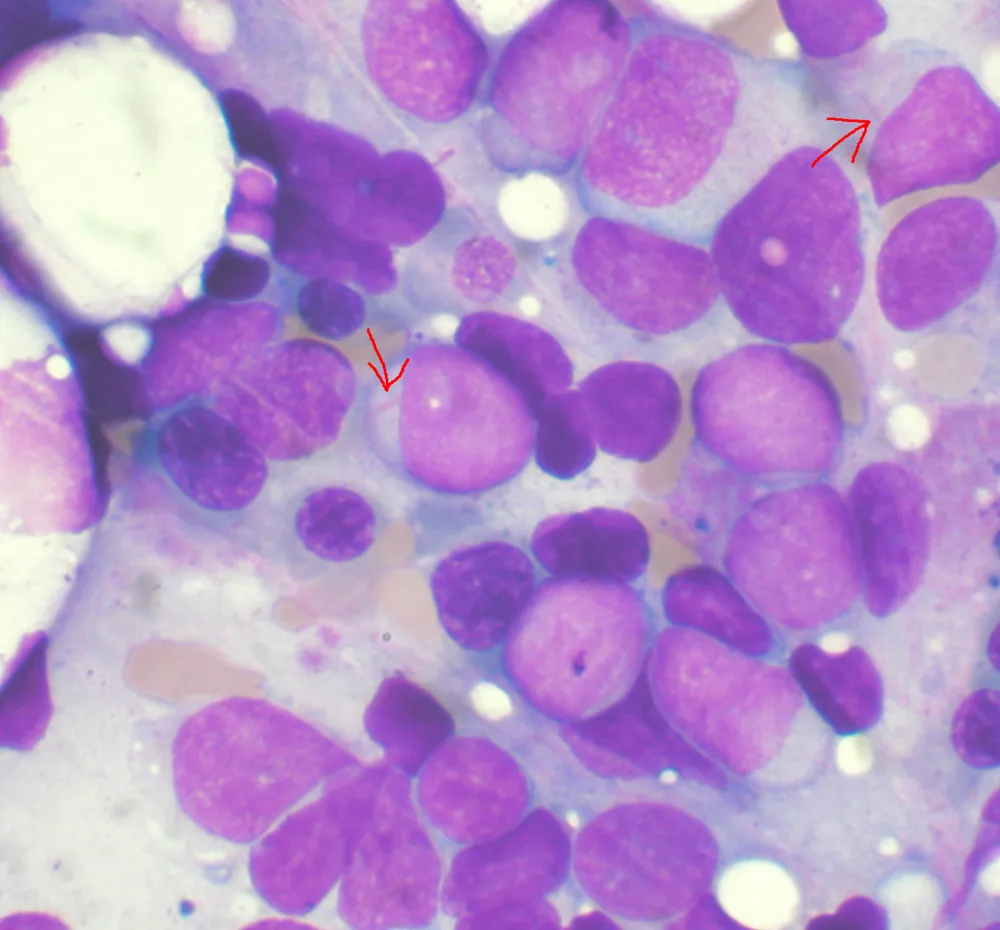
Blood and bone marrow morphology and flow cytometry are the basis of diagnosis. Acute promyelocytic leukaemia (APL, with PML::RARA) has a much better prognosis and different treatment: tretinoin (ATRA) and arsenic trioxide, with added chemotherapy for a white cell count above 10,000/µL [3]. The APL regimen and doses are on the leukaemia page.
- 2
Cytogenetics and a rapid molecular panel
The karyotype and molecular testing, including FLT3 (ITD and TKD), NPM1, IDH1 and IDH2, CEBPA (bZIP), TP53 and myelodysplasia-related genes, determine both the ELN risk and targeted treatment [3, 4]. ICC recommends molecular results within 3 to 5 days, a goal that is unattainable in many centres [3].
- 3
- 4
Assess fitness, comorbidities and donors
Performance status, cardiac, pulmonary, hepatic and renal function and, in transplant candidates, the haematopoietic cell transplantation comorbidity index (HCT-CI), which predicts non-relapse mortality and survival [11]. Start the donor search early; with haploidentical transplant almost all patients have a donor [3].
WHO 2022 versus ICC 2022 classification
| Topic | WHO 2022 | ICC 2022 |
|---|---|---|
| Overall structure | Two families: AML with defining genetic abnormalities and AML defined by differentiation; the term AML, NOS was dropped [1] | A hierarchy: recurrent genetic abnormality, then TP53 mutation, then myelodysplasia-related mutations, then myelodysplasia-related cytogenetics and finally AML, NOS [2, 3] |
| Minimum blasts for genetic subtypes | No minimum blast count, except AML with BCR::ABL1 and AML with CEBPA mutation, which need 20% [1] | At least 10% blasts, except BCR::ABL1, which needs 20% [2] |
| 10 to 19% blasts without a defining abnormality | MDS with increased blasts type 2 (MDS-IB2); the AML boundary remains 20%, although MDS-IB2 can be considered equivalent to AML for treatment [1] | A new MDS/AML category; these patients can enter both MDS and AML trials [2] |
| TP53 mutation | No separate TP53-based AML category; acute erythroid leukaemia has a high prevalence of biallelic TP53 inactivation [1] | AML and MDS/AML with TP53 mutation (any mutation with VAF above 10%) is a separate category [2] |
| Myelodysplasia-related mutations | 8 genes (AML-MR): SRSF2, SF3B1, U2AF1, ZRSR2, ASXL1, EZH2, BCOR and STAG2 [1] | 9 genes: the same 8 genes plus RUNX1 [2] |
| Myelodysplasia-related cytogenetics | The list includes del(11q) and monosomy 13 or del(13q) [1] | The list includes trisomy 8 and del(20q) [2] |
| CEBPA | Biallelic mutation or a single bZIP mutation; with at least 20% blasts [1] | Only in-frame bZIP mutations, whether single or biallelic [2, 3] |
| History of MDS, cytotoxic therapy and germline predisposition | A history of MDS or MDS/MPN is itself an AML-MR criterion; "post cytotoxic therapy" and "with germline predisposition" fall under secondary myeloid neoplasms [1] | These are added to the diagnosis as qualifiers, such as "therapy-related" or "progressed from MDS" [2] |
The two classifications have more similarities than differences, and treatment decisions should not be based on the diagnostic label alone [3].
ELN 2022 and ELN 2024 genetic risk
| Risk group | Genetic abnormalities |
|---|---|
| Favourable | t(8;21)(q22;q22.1)/RUNX1::RUNX1T1; inv(16)(p13.1q22) or t(16;16)(p13.1;q22)/CBFB::MYH11; NPM1 mutation without FLT3-ITD; in-frame bZIP CEBPA mutation [3, 4] |
| Intermediate | FLT3-ITD (regardless of allelic ratio or NPM1 mutation); t(9;11)(p21.3;q23.3)/MLLT3::KMT2A; abnormalities not classified as favourable or adverse [3] |
| Adverse | t(6;9)(p23;q34.1)/DEK::NUP214; KMT2A rearrangement except KMT2A-PTD; t(9;22)(q34.1;q11.2)/BCR::ABL1; t(8;16)(p11;p13)/KAT6A::CREBBP; inv(3) or t(3;3)/GATA2, MECOM; other MECOM rearrangements; monosomy 5 or del(5q), monosomy 7, monosomy 17 or 17p abnormality; complex or monosomal karyotype; ASXL1, BCOR, EZH2, RUNX1, SF3B1, SRSF2, STAG2, U2AF1 or ZRSR2 mutation; TP53 mutation with VAF ≥10% [3] |
KIT or FLT3 mutations do not change the favourable group of t(8;21) and inv(16); NPM1 with adverse cytogenetics is adverse, but NPM1 with myelodysplasia-related mutations does not currently change the group; t(9;11) takes precedence over rare concurrent adverse mutations. A complex karyotype means at least 3 unrelated abnormalities without another defining abnormality and excludes hyperdiploid karyotypes with 3 or more trisomies without structural abnormalities. A monosomal karyotype means at least 2 distinct monosomies (excluding X and Y), or one autosomal monosomy with at least one structural abnormality (excluding CBF AML) [3]. In the validation of ELN 2022 in 1118 intensively treated patients, 15% of patients changed group, and those who were "adverse" only because of myelodysplasia-related mutations had better outcomes than other adverse patients [12].
| Risk group | Genetic abnormalities |
|---|---|
| Favourable | NPM1 or IDH2 mutation without FLT3-ITD, NRAS, KRAS and TP53; IDH1 mutation without TP53; DDX41 mutation; other abnormalities without FLT3-ITD, NRAS, KRAS and TP53 [3, 5] |
| Intermediate | Other abnormalities with FLT3-ITD and/or NRAS and/or KRAS mutation, without TP53 mutation [3] |
| Adverse | TP53 mutation [3] |
This classification does not apply to patients who have previously received a hypomethylating agent; "favourable" IDH1 applies specifically to azacitidine + ivosidenib; a DDX41 mutation with an allele frequency near 50% should raise suspicion of germline predisposition. In the analysis of VIALE-A and the phase 1b study, median survival in the three groups with TP53 mutation, FLT3-ITD or NRAS/KRAS, and none of these four mutations was 5.5, 12.1 and 26.5 months respectively [3].
Fitness assessment and choice of treatment intensity
Today the question is less "who can tolerate intensive chemotherapy?" than "who will benefit from it?"; even a "fit" patient with adverse biology may not benefit from intensive treatment [3].
- Age: age over 75 is a relative contraindication to intensive chemotherapy [3].
- Unfitness criteria: the strict criteria proposed by Ferrara (severe hepatic, renal, cardiac and pulmonary impairment) have been accepted by the FDA; they are used as trial eligibility criteria and have predicted early death after intensive chemotherapy [3]. In VIALE-A, eligibility was age 75 or over or one of: ECOG 2 to 3, severe cardiac or pulmonary disease, moderate hepatic impairment, creatinine clearance below 45 mL/min or another comorbidity [13].
- Patients aged 60 to 75: the largest and most difficult group for decisions. In a phase 3 trial of 606 patients aged 60 or over, 10-day decitabine vs "7+3" gave similar 4-year survival (26% vs 30%; HR 1.04) [3].
- TP53: in VIALE-A, adding venetoclax in TP53-mutated AML raised composite complete remission (55.3% vs 0%) but did not improve survival; CPX-351 was also not superior to "7+3" in this group [3]. These patients should enter a clinical trial where possible.
Choosing induction treatment
Induction algorithm by fitness and genetics
- 1
Patient fit for intensive treatment: "7+3"
- 2
Favourable or intermediate cytogenetics: add gemtuzumab ozogamicin
In ALFA-0701 (age 50 to 70), gemtuzumab 3 mg/m² on days 1, 4 and 7 increased 2-year event-free survival from 17.1% to 40.8% (HR 0.58) [16]. In an individual patient data meta-analysis, a survival benefit was seen in favourable (20.7% absolute at 6 years) and intermediate (5.7%) cytogenetics but not in adverse cytogenetics; the 3 mg/m² dose was as effective as 6 mg/m², with fewer early deaths [17]. Consider the risk of sinusoidal obstruction syndrome at a later transplant [3].
- 3
FLT3 mutation: "7+3" + midostaurin or quizartinib
Midostaurin in RATIFY (patients aged 18 to 59, ITD or TKD) reduced the risk of death (HR 0.78) [7]. Quizartinib in QuANTUM-First (FLT3-ITD only, up to age 75) increased median survival from 15.1 to 31.9 months (HR 0.78) [8]; no survival benefit was seen in the subgroup aged 60 and over (HR 0.91). In FLT3-TKD, midostaurin is chosen, and quizartinib, unlike midostaurin, is also approved for post-treatment maintenance [3].
- 4
Secondary or therapy-related AML at age 60 to 75: CPX-351
CPX-351 (liposomal daunorubicin and cytarabine) vs "7+3" improved median survival (9.56 vs 5.95 months; HR 0.69) and remission (47.7% vs 33.3%) [18], and 5-year survival was 18% vs 8% [19]. It was not superior in TP53-mutated disease, and in retrospective comparisons with venetoclax + HMA it gave similar survival but more infections and hospital admissions [3].
- 5
Patient unfit for intensive treatment: venetoclax + azacitidine
In VIALE-A, complete remission (36.7% vs 17.9%), composite complete remission (66.4% vs 28.3%) and median survival (14.7 vs 9.6 months; HR 0.66) were better; febrile neutropenia 42% vs 19% [6]. At final follow-up, the HR for death was 0.58 and 24-month survival 37.5% vs 16.9% [20]. Alternatives: venetoclax with decitabine or low-dose cytarabine, or with oral decitabine-cedazuridine [13, 21].
- 6
IDH1 in an unfit patient: ivosidenib + azacitidine
In AGILE, event-free survival (HR 0.33) and median survival (24.0 vs 7.9 months; HR 0.44) were better than with azacitidine alone; differentiation syndrome occurred in 14% [22]. There is no head-to-head comparison between this combination and venetoclax + azacitidine [3].
Response assessment and MRD
Response definitions: complete remission (CR) means bone marrow blasts below 5%, no circulating blasts or extramedullary disease, neutrophils above 1000 and platelets above 100,000/µL, and transfusion independence for red cells; CRh is the same marrow criterion with partial recovery (platelets above 50,000 and neutrophils above 500/µL) [13]. ELN 2022 added the CRh category and attached MRD status to all types of complete remission (for example CR with negative MRD) [3].
Methods and timing: RT-qPCR for NPM1 and CBF fusions, and multiparameter flow cytometry for other patients; both have a sensitivity of about 1 in 104, and NGS or ddPCR reach about 1 in 106. The first assessment is recommended after 2 cycles of treatment (bone marrow), with NPM1 or CBF monitoring every 4 to 6 weeks from blood or every 3 months from bone marrow. The negativity threshold for flow cytometry is below 0.1%. "MRD relapse" means conversion to positive after being negative, or a 1-log rise in qPCR copies confirmed in a second sample [3].
Prognostic value: in 346 NPM1-mutated patients, persistence of NPM1 transcripts in the blood after cycle 2 (15% of patients) was associated with 3-year relapse of 82% vs 30% and survival of 24% vs 75% [10]. In a meta-analysis of 11,151 patients, the HR for overall survival with negative MRD was 0.36, and 5-year survival 68% vs 34% [23]. In NPM1-mutated disease (AML17 and AML19), allogeneic transplant benefited only MRD-positive patients after induction (3-year survival 61% vs 24%), not MRD-negative ones (79% vs 82%), even with concurrent FLT3-ITD [3].
2025 ELN-DAVID update: a new qualitative category of MRD response (optimal, warning, high risk of treatment failure) was introduced, and highly sensitive NGS for FLT3-ITD was recommended after intensive chemotherapy and before transplant [24].
Post-remission treatment and indications for allogeneic transplant
Decision-making after first complete remission
- 1
ELN favourable risk: consolidation with cytarabine
Usually 3 to 4 cycles of high-dose cytarabine [3]. In CALGB, the 3 g/m² dose raised 4-year continuous remission in patients aged 60 or younger to 44% (24% with 100 mg/m²), but in patients over 60 it was no more than 16% in any group [25]. Persistent MRD (for example a reduction of less than 3 logs in RUNX1::RUNX1T1, or positive NPM1) favours transplant in first remission [3].
- 2
Intermediate and adverse risk: allogeneic transplant in first remission
In a meta-analysis of 24 prospective trials (6007 patients), allogeneic transplant in first remission improved overall survival in intermediate (HR 0.83) and adverse risk (HR 0.73), but gave no benefit in favourable risk (HR 1.07) [9]. A possible exception: NPM1 with FLT3-ITD and negative MRD, which may receive consolidation only [3].
- 3
Conditioning intensity
In BMT CTN 0901 (age 18 to 65, HCT-CI ≤4, blasts below 5%), reduced-intensity conditioning (RIC) gave lower treatment-related mortality (4.4% vs 15.8%) but much more relapse (48.3% vs 13.5%); 18-month relapse-free survival was better with myeloablative conditioning (67.8% vs 47.3%), which remained the standard for fit patients [26].
- 4
Post-transplant maintenance in FLT3-ITD
Sorafenib from day 30 to 60 after transplant reduced 1-year relapse from 24.5% to 7.0% (HR 0.25) [27], and at 5-year follow-up overall survival was 72.0% vs 55.9% (HR 0.55) [28]. Gilteritinib in MORPHO did not significantly improve relapse-free survival (HR 0.679; P=0.0518), and benefit was seen only in patients with detectable MRD before or after transplant (HR 0.515) [29].
- 5
Patient in remission not proceeding to transplant or further intensive treatment
Oral azacitidine (CC-486) in QUAZAR (age 55 and over, in remission after intensive treatment) improved median survival (24.7 vs 14.8 months) and relapse-free survival (10.2 vs 4.8 months) [30].
Targeted therapy by mutation
| Target | Drug | Place | Key evidence |
|---|---|---|---|
| FLT3-ITD | Sorafenib | Maintenance after allogeneic transplant based on a phase 3 trial (AML is not among the indications in the FDA label for sorafenib [35]) | 1-year relapse 7.0% vs 24.5%; 5-year survival 72.0% vs 55.9% [27, 28] |
| CD33 | Gemtuzumab ozogamicin | With "7+3" in favourable and intermediate cytogenetics; single agent at relapse | ALFA-0701; individual patient data meta-analysis [16, 17] |
| FLT3 (ITD or TKD) | Midostaurin | With intensive induction and consolidation | RATIFY: HR for death 0.78 [7] |
| FLT3-ITD | Quizartinib | With induction and consolidation, then maintenance for up to 36 cycles | QuANTUM-First: median survival 31.9 vs 15.1 months [8, 36] |
| FLT3 (ITD or TKD) | Gilteritinib | Relapsed or refractory AML | ADMIRAL: median survival 9.3 vs 5.6 months vs salvage chemotherapy [37] |
| IDH1 | Ivosidenib | First line in unfit patients (with azacitidine or as a single agent); relapsed or refractory AML | AGILE; at relapse, CR or CRh 30.4% [22, 38] |
| IDH1 | Olutasidenib | Relapsed or refractory AML | CR or CRh 35%; median duration 25.9 months [39] |
| IDH2 | Enasidenib | Relapsed or refractory AML | Overall response 40.3%; complete remission 19.3% [40] |
| KMT2A rearrangement | Revumenib | Relapsed or refractory acute leukaemia from age 1 | AUGMENT-101: CR or CRh 22.8% [41] |
| NPM1 mutation | Revumenib or ziftomenib | Relapsed or refractory AML with no satisfactory alternative | CR or CRh 23.4% with revumenib and 22% with ziftomenib [42, 43] |
Differentiation syndrome is a shared toxicity of IDH inhibitors, FLT3 inhibitors (gilteritinib) and menin inhibitors and carries a boxed warning [31, 32, 33, 34].
Principles of treating relapsed or refractory AML: 5-year survival is only about 10%, and age, the length of first remission, initial cytogenetics and previous transplant determine the prognosis [3]. The main approach in a patient who wants treatment is salvage therapy followed by allogeneic transplant if remission is achieved; none of the intensive salvage regimens (mitoxantrone + etoposide + cytarabine, high-dose cytarabine, clofarabine + cytarabine or FLAG-IDA) is clearly superior [3]. In the ASAP trial, immediate transplant vs salvage then transplant gave similar 4-year survival (46% vs 49%) [3]. Adding venetoclax to FLAG-IDA produced composite complete remission of 61 to 75% but severe infections were common; venetoclax + HMA at relapse (off label) has given responses of 31 to 60% in real-world studies [3]. For relapse after transplant, tapering GVHD prophylaxis, donor lymphocyte infusion (DLI) or a second transplant are options [3]. The targeted drug is chosen based on the mutation present at relapse (table above) [3].
Treatment regimens and doses
Treatment regimens and doses: index18 regimens
- Tumour lysis syndrome and high white cell count: start venetoclax, revumenib and ziftomenib only when the white cell count is below 25×109/L; before venetoclax, hydration and a uric acid-lowering drug, and monitoring of electrolytes and creatinine before each new dose, 6 to 8 hours afterwards and 24 hours after reaching the final dose, are needed [13, 33, 34]. Before gemtuzumab, cytoreduction is recommended with a white cell count of 30×109/L or more [44].
- Differentiation syndrome: if suspected, start systemic corticosteroids and haemodynamic monitoring (for at least 3 days with ivosidenib, gilteritinib and revumenib); control non-infectious leucocytosis with hydroxyurea [31, 32, 33].
- QTc: start quizartinib and revumenib only with QTcF ≤450 ms; correct potassium and magnesium and stop QT-prolonging drugs where possible [33, 36].
- Interactions with azoles and CYP3A inhibitors: the doses of venetoclax, quizartinib, ivosidenib and revumenib must be reduced according to the label (details in each regimen note) [13, 31, 33, 36].
- Liver: gemtuzumab can cause veno-occlusive disease (VOD/SOS); stop the drug if it occurs [44].
Induction and consolidation in patients fit for intensive treatment
7+3 (daunorubicin or idarubicin + cytarabine)
Induction for newly diagnosed non-APL AML in a patient fit for intensive chemotherapy
Induction for newly diagnosed non-APL AML in a patient fit for intensive chemotherapy
| Drug | Dose | Route | Schedule |
|---|---|---|---|
| Induction | |||
| Cytarabine | 100 or 200 mg/m² a day | IV, continuous infusion | Days 1 to 7 |
| Daunorubicin | 60 mg/m² a day (up to 90 in trials) | IV | Days 1 to 3 |
| Induction (instead of daunorubicin) | |||
| Idarubicin | 12 mg/m² a day | IV | Days 1 to 3 |
| Second induction for inadequate response (5+2) | |||
| Cytarabine + daunorubicin or idarubicin | IV | Cytarabine 5 days; anthracycline 2 days | |
The cytarabine and anthracycline doses are the backbone of the RATIFY and QuANTUM-First trials [36, 45]; a second 5+2 induction (cytarabine for 5 days and an anthracycline for 2 days) was used in the CPX-351 and QuANTUM-First trials; dose details are in the full papers [19, 36]. Daunorubicin 90 vs 45 mg/m² improved survival in patients aged 17 to 60 [14], but 90 vs 60 gave no benefit and more 60-day deaths [15]. Assess cardiac function before starting; the CPX-351 label makes this assessment mandatory before induction [46].
High-dose cytarabine for consolidation
Consolidation in ELN favourable risk, or until transplant in other groups
Consolidation in ELN favourable risk, or until transplant in other groups
| Drug | Dose | Route | Schedule |
|---|---|---|---|
| Consolidation | |||
| Cytarabine | 3 g/m² every 12 hours (1.5 to 3 g/m² in QuANTUM-First) | IV, 3-hour infusion | Days 1, 3 and 5 |
The CALGB regimen: cytarabine 3 g/m² as a 3-hour infusion every 12 hours on days 1, 3 and 5, four cycles; its benefit was limited to patients aged 60 or younger [25]. The same dose was used in RATIFY, and a range of 1.5 to 3 g/m² in QuANTUM-First [36, 45]. In a randomised trial of 860 patients aged 18 to 60, higher-dose cytarabine in induction gave no benefit over an intermediate dose and caused more toxicity [47]. Number of cycles: 3 to 4 in favourable risk [3].
7+3 + gemtuzumab ozogamicin (ALFA-0701)
Newly diagnosed CD33-positive AML; greatest benefit in favourable and intermediate cytogenetics (patients aged 50 to 70 in ALFA-0701)
Newly diagnosed CD33-positive AML; greatest benefit in favourable and intermediate cytogenetics (patients aged 50 to 70 in ALFA-0701)
| Drug | Dose | Route | Schedule |
|---|---|---|---|
| Induction | |||
| Daunorubicin | 60 mg/m² | IV | Days 1 to 3 |
| Cytarabine | 200 mg/m² a day | IV | Days 1 to 7 |
| Gemtuzumab ozogamicin | 3 mg/m² (maximum one 4.5 mg vial) | IV | Days 1, 4 and 7 |
| Consolidation (2 cycles) | |||
| Daunorubicin | 60 mg/m² | IV | Cycle 1 day 1; cycle 2 days 1 and 2 |
| Cytarabine | 1 g/m² every 12 hours | IV | Days 1 to 4 |
| Gemtuzumab ozogamicin | 3 mg/m² (maximum one vial) | IV | Day 1 |
Premedication in adults: paracetamol 650 mg and diphenhydramine 50 mg one hour before the infusion, and methylprednisolone 1 mg/kg within 30 minutes before it. Stop permanently for VOD; if platelets do not reach 100×109/L within 14 days of the planned start of consolidation, do not give gemtuzumab in consolidation; in ALFA-0701 an interval of at least 2 months from the last dose to transplant was recommended [44]. Persistent thrombocytopenia was more common in the gemtuzumab group (16% vs 3%), without an increase in toxic deaths [16].
Evidence: ALFA-0701 (2012)
7+3 + midostaurin (RATIFY)
Newly diagnosed FLT3-mutated AML (ITD or TKD) in a patient fit for intensive treatment; patients aged 18 to 59 in RATIFY
Newly diagnosed FLT3-mutated AML (ITD or TKD) in a patient fit for intensive treatment; patients aged 18 to 59 in RATIFY
| Drug | Dose | Route | Schedule |
|---|---|---|---|
| Induction (up to 2 cycles) | |||
| Daunorubicin | 60 mg/m² a day | IV | Days 1 to 3 |
| Cytarabine | 200 mg/m² a day | IV | Days 1 to 7 |
| Midostaurin | 50 mg twice a day with food | Oral | Days 8 to 21 |
| Consolidation (up to 4 cycles) | |||
| Cytarabine | 3 g/m² every 12 hours | IV | Days 1, 3 and 5 |
| Midostaurin | 50 mg twice a day with food | Oral | Days 8 to 21 |
Give prophylactic antiemetics before midostaurin. The FDA label approves its use only with induction and consolidation; single-agent continuation for up to 12 cycles was part of the RATIFY protocol, and patients who went to transplant stopped study treatment [45].
7+3 + quizartinib (QuANTUM-First)
Newly diagnosed FLT3-ITD-positive AML (age 18 to 75 in the trial), only if QTcF ≤450 msCycle length: 28-day cycles
Newly diagnosed FLT3-ITD-positive AML (age 18 to 75 in the trial), only if QTcF ≤450 ms
| Drug | Dose | Route | Schedule |
|---|---|---|---|
| Induction (up to 2 cycles) | |||
| Cytarabine + daunorubicin or idarubicin | Cytarabine 100 or 200 mg/m² a day; daunorubicin 60 or idarubicin 12 mg/m² a day | IV | Cytarabine days 1 to 7; anthracycline days 1 to 3 |
| Quizartinib | 35.4 mg once a day | Oral | Days 8 to 21 (in a second 5+2 induction: days 6 to 19) |
| Consolidation (up to 4 cycles) | |||
| Cytarabine | 1.5 to 3 g/m² every 12 hours | IV | Days 1, 3 and 5 |
| Quizartinib | 35.4 mg once a day | Oral | Days 6 to 19 |
| Maintenance (up to 36 cycles) | |||
| Quizartinib | 26.5 mg once a day, then 53 mg | Oral | Days 1 to 14 of the first cycle 26.5 mg; from day 15, 53 mg if QTcF ≤450 ms, continuously |
ECG before starting and weekly during induction and consolidation; in maintenance, weekly for at least one month after starting or increasing the dose. QTcF 481 to 500: reduce the dose without stopping; above 500: stop and resume at a lower dose after it falls below 450; if QTcF above 500 occurred during induction or consolidation, maintenance stays at 26.5 mg. With a strong CYP3A inhibitor, reduce 53 to 26.5, 35.4 to 17.7 and 26.5 to 17.7 mg, and if the current dose is 17.7 mg, stop the drug while the inhibitor is used. Start maintenance after count recovery (neutrophils above 500 and platelets above 50,000/µL), and stop it 7 days before transplant conditioning [36].
Evidence: QuANTUM-First (2023)
CPX-351 (liposomal daunorubicin and cytarabine)
Newly diagnosed therapy-related AML or AML with myelodysplasia-related changes (age 60 to 75 in the trial)
Newly diagnosed therapy-related AML or AML with myelodysplasia-related changes (age 60 to 75 in the trial)
| Drug | Dose | Route | Schedule |
|---|---|---|---|
| First induction | |||
| CPX-351 | Daunorubicin 44 mg/m² and cytarabine 100 mg/m² (liposomal) | IV, 90-minute infusion | Days 1, 3 and 5 |
| Second induction (if not in remission) | |||
| CPX-351 | Daunorubicin 44 mg/m² and cytarabine 100 mg/m² | IV, 90 minutes | Days 1 and 3 |
| Consolidation (up to 2 cycles) | |||
| CPX-351 | Daunorubicin 29 mg/m² and cytarabine 65 mg/m² | IV, 90 minutes | Days 1 and 3 |
Before each cycle, calculate the previous cumulative anthracycline exposure and assess cardiac, hepatic and renal function; give prophylactic antiemetics. Start consolidation only after neutrophils exceed 0.5 and platelets 50×109/L. CPX-351 is not interchangeable with conventional daunorubicin or cytarabine products [46]. In the phase 3 trial, neutrophil and platelet recovery took longer with CPX-351 [18].
Evidence: CPX-351 (2018)
Doses follow the trial protocol, guideline or official drug label (source given in the notes of each regimen). Before prescribing, check blood counts, renal and hepatic function, drug interactions and the patient’s condition, and adjust the dose according to the drug label.
Lower-intensity treatment, maintenance and post-transplant treatment
Venetoclax + azacitidine (VIALE-A)
Newly diagnosed AML at age 75 or over, or with comorbidities that preclude intensive chemotherapyCycle length: Every 28 days
Newly diagnosed AML at age 75 or over, or with comorbidities that preclude intensive chemotherapy
| Drug | Dose | Route | Schedule |
|---|---|---|---|
| Cycle 1: ramp-up | |||
| Venetoclax | 100 mg (day 1), 200 mg (day 2), 400 mg (day 3) | Oral, with food | Days 1 to 3 |
| Continuation | |||
| Venetoclax | 400 mg once a day | Oral, with food | Days 1 to 28 of each cycle |
| All cycles | |||
| Azacitidine | 75 mg/m² a day | Subcutaneous or IV | Days 1 to 7 |
Start only with a white cell count below 25×109/L (cytoreduction if needed); hydration and a uric acid-lowering drug from before the first dose until the end of the ramp-up; potassium, uric acid, phosphorus, calcium and creatinine before each new dose, 6 to 8 hours afterwards and 24 hours after reaching the final dose. Interactions: with posaconazole 10, 20, 50, then 70 mg; with other strong CYP3A inhibitors 10, 20, 50, then 100 mg; with a moderate CYP3A inhibitor or a P-gp inhibitor, reduce by at least 50%. Cytopenias before remission are usually not a reason to interrupt (a bone marrow assessment is recommended); grade 4 neutropenia or thrombocytopenia after remission lasting 7 days or more: delay the next cycle until recovery to grade 1 or 2 and, if it recurs, shorten venetoclax by 7 days in each cycle. In VIALE-A, after remission with cytopenias was confirmed at the end of cycle 1, venetoclax was held for up to 14 days or until neutrophils ≥500 and platelets ≥50,000/µL [13].
Evidence: VIALE-A (2024), VIALE-A (2020)
Venetoclax + decitabine, low-dose cytarabine or oral decitabine-cedazuridine
The same population as VIALE-A; alternative partner drugs for venetoclaxCycle length: Every 28 days
The same population as VIALE-A; alternative partner drugs for venetoclax
| Drug | Dose | Route | Schedule |
|---|---|---|---|
| With decitabine | |||
| Decitabine | 20 mg/m² a day | IV | Days 1 to 5 |
| Venetoclax | Ramp-up 100, 200, 400 mg; then 400 mg once a day | Oral, with food | Days 1 to 28 |
| With low-dose cytarabine | |||
| Cytarabine | 20 mg/m² a day | Subcutaneous | Days 1 to 10 |
| Venetoclax | Ramp-up 100, 200, 400 mg; from day 4 onwards 600 mg once a day | Oral, with food | Days 1 to 28 |
| With decitabine-cedazuridine | |||
| Decitabine 35 mg + cedazuridine 100 mg | One tablet once a day | Oral, fasting | Days 1 to 5 (day 1 together with day 1 of venetoclax) |
| Venetoclax | 100 mg on day 1, 200 mg on day 2, then 400 mg once a day | Oral, with food | Days 1 to 28 |
All the points on tumour lysis prevention, CYP3A interactions and cytopenia management for venetoclax + azacitidine apply here too [13]. Take the decitabine-cedazuridine tablet 2 hours before or 2 hours after food and 2 hours apart from venetoclax, and do not substitute it for IV decitabine in the middle of a cycle; the venetoclax dose for this combination is the dose of the single-arm ASTX727-07 study, in which 42 of 101 patients achieved CR and 53 achieved CR or CRh [21].
Ivosidenib + azacitidine (AGILE)
Newly diagnosed IDH1-mutated AML at age 75 or over or with comorbidities that preclude intensive treatmentEach drug’s schedule in the table
Newly diagnosed IDH1-mutated AML at age 75 or over or with comorbidities that preclude intensive treatment
| Drug | Dose | Route | Schedule |
|---|---|---|---|
| All cycles | |||
| Ivosidenib | 500 mg once a day (without a high-fat meal) | Oral | Continuously from day 1 of cycle 1 |
| Azacitidine | 75 mg/m² a day | Subcutaneous or IV | Days 1 to 7 (or days 1 to 5 and 8 to 9) |
Boxed warning for differentiation syndrome. ECG before starting, weekly for the first 3 weeks and then at least monthly; QTc above 480 to 500: hold and resume at 500 mg after it falls to ≤480; above 500: hold and resume at 250 mg. Non-infectious leucocytosis (above 25×109/L): hydroxyurea. With a strong CYP3A4 inhibitor, 250 mg [31].
Evidence: AGILE (2022)
Sorafenib maintenance after allogeneic transplant
FLT3-ITD AML after allogeneic transplant, in composite complete remission before and after transplant, age 18 to 60, ECOG 0 to 2, with haematological recovery by day 60Cycle length: Continuous
FLT3-ITD AML after allogeneic transplant, in composite complete remission before and after transplant, age 18 to 60, ECOG 0 to 2, with haematological recovery by day 60
| Drug | Dose | Route | Schedule |
|---|---|---|---|
| Sorafenib | 400 mg twice a day (within a range of 200 to 800 mg a day for toxicity) | Oral | Start on day 30 to 60 after transplant |
In the phase 3 trial, grade 3 and 4 adverse events in the first 210 days (infection, acute and chronic GVHD) were similar in both groups, and haematological toxicity was more common with sorafenib (15% vs 7%) [27]; at 5-year follow-up, non-relapse mortality and chronic GVHD did not increase [28]. The dose and duration come from the trial registration [48].
Evidence: Xuan 2023 (2023)
Oral azacitidine maintenance (QUAZAR)
AML in first CR or CRi after intensive induction, in a patient who cannot complete curative intensive treatment (including transplant)Cycle length: Every 28 days
AML in first CR or CRi after intensive induction, in a patient who cannot complete curative intensive treatment (including transplant)
| Drug | Dose | Route | Schedule |
|---|---|---|---|
| Maintenance | |||
| Oral azacitidine | 300 mg once a day | Oral | Days 1 to 14 |
Antiemetic 30 minutes before each dose for the first 2 cycles. If neutrophils on day 1 are below 0.5×10⁹/L, delay the cycle; febrile neutropenia in 2 consecutive cycles: reduce to 200 mg and, if it recurs, shorten by 7 days. Not interchangeable with subcutaneous or IV azacitidine [49]. Grade 3 or 4 neutropenia occurred in 41% vs 24% [30].
Evidence: QUAZAR AML-001 (2020)
Doses follow the trial protocol, guideline or official drug label (source given in the notes of each regimen). Before prescribing, check blood counts, renal and hepatic function, drug interactions and the patient’s condition, and adjust the dose according to the drug label.
Targeted treatment in relapsed or refractory AML
Single-agent gemtuzumab ozogamicin
Relapsed or refractory CD33-positive AML (adults and children aged 2 and over)Cycle length: One cycle
Relapsed or refractory CD33-positive AML (adults and children aged 2 and over)
| Drug | Dose | Route | Schedule |
|---|---|---|---|
| Gemtuzumab ozogamicin | 3 mg/m² (maximum one 4.5 mg vial) | IV | Days 1, 4 and 7 |
Gilteritinib (ADMIRAL)
Relapsed or refractory FLT3-mutated AML (ITD or TKD) in adultsCycle length: Continuous
Relapsed or refractory FLT3-mutated AML (ITD or TKD) in adults
| Drug | Dose | Route | Schedule |
|---|---|---|---|
| Gilteritinib | 120 mg once a day | Oral, with or without food | Continuous |
Boxed warning for differentiation syndrome. ECG before starting, on days 8 and 15 of cycle 1 and before the next two cycles; QTc above 500: hold and resume at 80 mg; posterior reversible encephalopathy syndrome: stop permanently. Blood counts and chemistry (including CPK) weekly in the first month, every two weeks in the second month and then monthly [32].
Evidence: ADMIRAL (2019)
Single-agent ivosidenib
Relapsed or refractory IDH1-mutated AMLCycle length: Continuous
Relapsed or refractory IDH1-mutated AML
| Drug | Dose | Route | Schedule |
|---|---|---|---|
| Ivosidenib | 500 mg once a day | Oral, without a high-fat meal | Continuous |
Olutasidenib
Relapsed or refractory IDH1-mutated AMLCycle length: Continuous
Relapsed or refractory IDH1-mutated AML
| Drug | Dose | Route | Schedule |
|---|---|---|---|
| Olutasidenib | 150 mg twice a day | Oral, fasting (1 hour before or 2 hours after food) | Continuous |
Enasidenib
Relapsed or refractory IDH2-mutated AMLCycle length: Continuous
Relapsed or refractory IDH2-mutated AML
| Drug | Dose | Route | Schedule |
|---|---|---|---|
| Enasidenib | 100 mg once a day | Oral, with or without food | Continuous |
Revumenib (AUGMENT-101)
Relapsed or refractory acute leukaemia with a KMT2A translocation (age 1 and over), or relapsed or refractory NPM1-mutated AML with no satisfactory alternativeCycle length: Continuous
Relapsed or refractory acute leukaemia with a KMT2A translocation (age 1 and over), or relapsed or refractory NPM1-mutated AML with no satisfactory alternative
| Drug | Dose | Route | Schedule |
|---|---|---|---|
| Weight 40 kg or more | |||
| Revumenib | 270 mg twice a day (with a strong CYP3A4 inhibitor: 160 mg twice a day) | Oral | Continuous |
| Weight below 40 kg | |||
| Revumenib | 160 mg/m² twice a day (with a strong CYP3A4 inhibitor: 95 mg/m²) | Oral | Continuous |
Boxed warning for differentiation syndrome and QTc prolongation and torsade de pointes; do not start with QTcF above 450. ECG before starting, at least weekly for the first 4 weeks and then monthly; blood counts, electrolytes and liver enzymes before starting and monthly [33]. In the KMT2A cohort, grade ≥3 differentiation syndrome occurred in 16.0% and grade ≥3 QTc prolongation in 13.8% [41].
Evidence: AUGMENT-101 (2025), AUGMENT-101 (2025)
Ziftomenib (KOMET-001)
Relapsed or refractory NPM1-mutated AML in adults with no satisfactory alternativeCycle length: Continuous
Relapsed or refractory NPM1-mutated AML in adults with no satisfactory alternative
| Drug | Dose | Route | Schedule |
|---|---|---|---|
| Ziftomenib | 600 mg once a day | Oral, fasting (1 hour before or 2 hours after food) | Continuous |
Boxed warning for differentiation syndrome: if suspected, stop the drug and start oral or IV corticosteroids with haemodynamic monitoring. Avoid proton pump inhibitors; if an H2 antagonist is unavoidable, take ziftomenib 2 hours before or 10 hours after it [34]. Differentiation syndrome occurred in 25% of patients (15% grade 3) [43].
Evidence: KOMET-001 (2025)
Doses follow the trial protocol, guideline or official drug label (source given in the notes of each regimen). Before prescribing, check blood counts, renal and hepatic function, drug interactions and the patient’s condition, and adjust the dose according to the drug label.
Key trials and guidelines
Key AML evidence
15 itemsDiagnosis and management of AML in adults: 2022 recommendations from an international expert panel on behalf of the ELN
The 5th edition of the World Health Organization Classification of Haematolymphoid Tumours: Myeloid and Histiocytic/Dendritic Neoplasms
Long-term follow-up of VIALE-A: Venetoclax and azacitidine in chemotherapy-ineligible untreated acute myeloid leukemia
Sorafenib maintenance after allogeneic haemopoietic stem-cell transplantation in patients with FLT3-ITD acute myeloid leukaemia: long-term follow-up of an open-label, multicentre, randomised, phase 3 trial
Effect of gemtuzumab ozogamicin on survival of adult patients with de-novo acute myeloid leukaemia (ALFA-0701): a randomised, open-label, phase 3 study
Oral Azacitidine Maintenance Therapy for Acute Myeloid Leukemia in First Remission
Midostaurin plus Chemotherapy for Acute Myeloid Leukemia with a FLT3 Mutation
Quizartinib plus chemotherapy in newly diagnosed patients with FLT3-internal-tandem-duplication-positive acute myeloid leukaemia (QuANTUM-First): a randomised, double-blind, placebo-controlled, phase 3 trial
CPX-351 (cytarabine and daunorubicin) Liposome for Injection Versus Conventional Cytarabine Plus Daunorubicin in Older Patients With Newly Diagnosed Secondary Acute Myeloid Leukemia
Ivosidenib and Azacitidine in IDH1-Mutated Acute Myeloid Leukemia
Gilteritinib or Chemotherapy for Relapsed or Refractory FLT3-Mutated AML
Menin Inhibition With Revumenib for KMT2A-Rearranged Relapsed or Refractory Acute Leukemia (AUGMENT-101)
Menin inhibition with revumenib for NPM1 -mutated relapsed or refractory acute myeloid leukemia: the AUGMENT-101 study
Ziftomenib in Relapsed or Refractory NPM1 -Mutated AML
Azacitidine and Venetoclax in Previously Untreated Acute Myeloid Leukemia
- FLT3-ITD in ELN 2022 is always "intermediate", even with mutated NPM1; the allelic ratio no longer matters [3].
- Mutated NPM1 with an adverse karyotype = adverse risk; but NPM1 without FLT3-ITD with myelodysplasia-related mutations is still "favourable" [3].
- RUNX1 is a myelodysplasia-related gene in ICC, but not in WHO 2022 [1, 2].
- WHO still requires 20% blasts for CEBPA and BCR::ABL1; ICC only for BCR::ABL1 [1, 2].
- In ELN 2024 (lower-intensity treatment), only TP53 is adverse, and myelodysplasia-related mutations are not in the adverse group [3].
- Midostaurin for ITD and TKD; quizartinib only for ITD and only with QTcF ≤450 [36, 45].
- Gemtuzumab gives no benefit in adverse cytogenetics [17].
- Daunorubicin 90 is better than 45, not better than 60 [14, 15].
- Venetoclax with posaconazole: cap of 70 mg; with other strong CYP3A inhibitors: 100 mg [13].
- RIC in fit patients greatly increased relapse; myeloablative conditioning remained the standard [26].
- Post-transplant gilteritinib maintenance was beneficial only in MRD-positive patients [29].
Self-assessment questions
A 48-year-old man with AML, normal karyotype, mutated NPM1 and FLT3-ITD with an allelic ratio of 0.2. What is the ELN 2022 risk group and the appropriate induction?
"Intermediate", because FLT3-ITD is intermediate regardless of the allelic ratio and the presence of NPM1 [3]. Induction with "7+3" plus midostaurin or quizartinib (with QTcF ≤450) is appropriate [7, 8]. After remission, allogeneic transplant in first remission is usually recommended, but in NPM1 + FLT3-ITD with negative MRD after induction, consolidation without transplant may be enough [3].
A 62-year-old woman with AML and SRSF2 and ASXL1 mutations, without a history of MDS. What is the diagnosis in WHO and ICC, and the ELN 2022 risk?
In WHO: AML, myelodysplasia-related (AML-MR); in ICC: AML with myelodysplasia-related gene mutations. The ELN 2022 risk is "adverse" [1, 2, 3]. If the same patient receives venetoclax + azacitidine, in ELN 2024 (no TP53, FLT3-ITD or NRAS/KRAS and no previous hypomethylating agent) she counts as "favourable" [3].
A 78-year-old patient with AML, an IDH1 mutation and ECOG 2. What are the induction options?
A patient with FLT3-ITD AML is in remission after allogeneic transplant. Which maintenance has phase 3 evidence?
Why must the venetoclax dose change in a patient on posaconazole prophylaxis, and by how much?
Venetoclax is a CYP3A substrate and posaconazole a strong inhibitor of it; in AML, a ramp-up of 10, 20 and 50 mg on days 1 to 3 and then 70 mg daily is recommended [13].
Which AML patients do not benefit from adding gemtuzumab ozogamicin to induction?
Patients with adverse cytogenetics; in the individual patient data meta-analysis, the survival benefit was in favourable and intermediate cytogenetics, not in adverse [17].
What is the criterion for complete remission with partial haematological recovery (CRh)?
Bone marrow blasts below 5% without evidence of disease, with partial count recovery: platelets above 50,000 and neutrophils above 500/µL [13].
Related cancer types
Treatment regimens (physicians)
Physician tools and lessons
References
51 referencesShow all references, 15 with a study cardClose the reference list
Numbers in the text, such as [1], refer to these sources. Sources with a “Study card” button are summarised in the site’s evidence library.
- 1
- 2
- 3
- 4
- 5
- 6
- 7
- 8
- 9
- 10
- 11Hematopoietic cell transplantation (HCT)-specific comorbidity index: a new tool for risk assessment before allogeneic HCT
- 12Validation and refinement of the 2022 European LeukemiaNet genetic risk stratification of acute myeloid leukemia
- 13
- 14
- 15
- 16
- 17
- 18CPX-351 (cytarabine and daunorubicin) Liposome for Injection Versus Conventional Cytarabine Plus Daunorubicin in Older Patients With Newly Diagnosed Secondary Acute Myeloid Leukemia
- 19
- 20Long-term follow-up of VIALE-A: Venetoclax and azacitidine in chemotherapy-ineligible untreated acute myeloid leukemia
- 21
- 22
- 23Association of Measurable Residual Disease With Survival Outcomes in Patients With Acute Myeloid Leukemia: A Systematic Review and Meta-analysis
- 242025 update on MRD in acute myeloid leukemia: a consensus document from the ELN-DAVID MRD Working Party
- 25
- 26
- 27
- 28
- 29
- 30Oral Azacitidine Maintenance Therapy for Acute Myeloid Leukemia in First Remission
- 31
- 32
- 33
- 34
- 35NEXAVAR (sorafenib) tablets — Prescribing Information
- 36
- 37Gilteritinib or Chemotherapy for Relapsed or Refractory FLT3-Mutated AML
- 38
- 39
- 40
- 41Menin Inhibition With Revumenib for KMT2A-Rearranged Relapsed or Refractory Acute Leukemia (AUGMENT-101)
- 42Menin inhibition with revumenib for NPM1-mutated relapsed or refractory acute myeloid leukemia: the AUGMENT-101 study
- 43Ziftomenib in Relapsed or Refractory NPM1-Mutated AML
- 44
- 45
- 46
- 47Cytarabine dose for acute myeloid leukemia
- 48Sorafenib for Prophylaxis of Leukemia Relapse in Allo-HSCT Recipients With FLT3-ITD Positive AML (NCT02474290)
- 49ONUREG (azacitidine) tablets — Prescribing Information
- 50REZLIDHIA (olutasidenib) capsules — Prescribing Information
- 51IDHIFA (enasidenib) tablets — Prescribing Information
This page is based on reputable scientific sources and was last updated on 28 October 2026. The content of this website is for educational and informational purposes only and does not replace consultation, diagnosis or treatment by a specialist physician. Consult your treating physician about any treatment decision.
Printed from the website; the full and up-to-date version: https://drdabiri.com/en/learn/aml-eln-2022-risk-treatment/